
Table of contents
- 1. Why Stacking Matters More in Banquet Venues
- 2. How Many Banquet Chairs Can Be Stacked Safely?
- 3. How Much Storage Space Do Stackable Banquet Chairs Need?
- 4. Frame Design and Upholstery Protection
- 5. Chair Weight and Staff Handling
- 6. Upholstery and Finish Selection for Bulk Orders
- 7. What Should Be Checked Before a Wholesale Order?
- 8. When Are Stackable Banquet Chairs the Right Choice?
- Final Thoughts: Plan for the Entire Event Cycle
A hotel ballroom may need 300 chairs for a wedding reception, 120 for a corporate dinner and only 60 for a smaller meeting. Between these events, the remaining chairs must be moved, stored and brought back into the room when required.
This is where stackable banquet chairs can make a practical difference.
But a chair that can be stacked is not automatically a good choice for every event venue. Poor stacking alignment, excessive weight, inadequate frame protection or an unsuitable storage arrangement can create problems for staff and increase the risk of damage during daily operations.
For hotel purchasing teams, wedding venue operators and furniture distributors, choosing stackable banquet chairs means evaluating the complete handling and storage process—not simply checking whether several chairs fit on top of one another.
1. Why Stacking Matters More in Banquet Venues
Unlike restaurants with relatively stable seating arrangements, banquet halls often change their furniture layout between events.
One day, a venue may require round dining tables with upholstered chairs. The next day, the same space may be arranged for a conference, leaving part of its chair inventory in storage.
When chairs are moved frequently, several practical questions become important.
How many chairs can staff handle safely? How much storage space is available? Can the chairs be transported without damaging their frames or upholstery?
For venues managing large furniture inventories, the answers affect daily operations.
Consider three different situations:
| Venue type | Common operational challenge | Purchasing priority |
|---|---|---|
| Hotel banquet hall | Frequent changes between dining and conference layouts | Efficient handling and storage |
| Wedding venue | Large numbers of matching chairs for scheduled events | Appearance consistency and stacking compatibility |
| Conference center | Repeated setup and removal of seating rows | Maneuverability and storage planning |
These requirements should be considered before choosing a specific banquet chair model.
Stackable banquet chairs are most useful when their design supports the venue’s actual operating procedures.
2. How Many Banquet Chairs Can Be Stacked Safely?
One of the first questions buyers ask is how many chairs can be placed in a single stack.
There is no universal answer.
The permitted stacking quantity depends on the chair’s frame, geometry, weight, stacking contact points and the manufacturer’s design.
A stack of lightweight chairs may behave differently from a stack of heavily upholstered chairs, even when both appear to have similar dimensions.
For this reason, buyers should request the manufacturer’s recommended stacking limit for the specific model.
Check the Complete Stack, Not Just One Chair
Before approving a bulk purchase, evaluate a representative stack using the proposed production design.
Important points include:
- Whether each chair sits correctly on the one below it
- Whether the stack remains stable on a suitable, level floor
- Whether contact points protect the frame and upholstery
- Whether chair legs or backrests become misaligned
- Whether the total stack can be handled using the intended equipment
- Whether stacking follows the manufacturer’s stated limits
Do not assume that a chair can safely be stacked higher simply because there is space above it.
A practical sample review should follow the manufacturer’s instructions and the venue’s safe-handling procedures.

3. How Much Storage Space Do Stackable Banquet Chairs Need?
Stacking chairs can reduce the floor area required for storage, but the actual space saving depends on the chair design.
Some chairs nest closely together, while others add considerable height with every additional chair.
The shape of the backrest, armrests and legs can also influence how efficiently a stack fits into a storage room.
Buyers should therefore request the stacked dimensions, not only the dimensions of an individual chair.
A Simple Storage Planning Example
Suppose an event venue plans to purchase 240 banquet chairs.
The manufacturer confirms that a particular model may be stacked in groups of eight under the specified conditions.
That would result in 30 chair stacks.
However, the storage plan must still account for:
| Storage requirement | What to check |
|---|---|
| Stack footprint | Length and width occupied by each stack |
| Stack height | Overall height at the approved stacking quantity |
| Handling clearance | Space needed for staff or suitable moving equipment |
| Access routes | Doorways, corridors and turning areas |
| Storage arrangement | Space between stacks and nearby objects |
| Floor conditions | Appropriate, level storage surfaces |
The example is only a calculation method. Eight chairs per stack is not a recommended limit for all banquet chairs.
In actual procurement, the stacking quantity and dimensions must come from the selected model’s verified specifications.
For venues with limited storage space, these measurements may be just as important as the appearance of the chair itself.
4. Frame Design and Upholstery Protection
When banquet chairs are stacked repeatedly, the areas where one chair contacts another deserve particular attention.
A frame that looks attractive in a product photograph may have contact points that become problematic during repeated handling.
For example, exposed metal components could rub against adjacent frames, while poorly positioned stacking surfaces may place unwanted pressure on upholstered sections.
This does not mean metal-framed or upholstered chairs are unsuitable for stacking.
It means the stacking mechanism should be evaluated as part of the product design.
What Should Buyers Inspect?
Frame connections
Check the visible joints, attachment points and overall alignment of the proposed chair structure.
Stacking contact points
Identify where chairs touch when stacked. Ask whether the design includes protective components or dedicated stacking supports.
Upholstery clearance
Check that stacking does not place excessive pressure on seat cushions or backrest upholstery.
Surface finishes
Review exposed metal or decorative finishes for possible rubbing and contact damage during normal handling.
Floor contact
Inspect the feet or glides and confirm whether they are appropriate for the intended flooring.
For bulk stackable banquet chairs, these small details can be important because the same handling process may be repeated across a large number of chairs.
5. Chair Weight and Staff Handling
A chair that stores efficiently may still be inconvenient if it is difficult to move.
This becomes particularly noticeable in large venues, where staff may need to transport many chairs between storage rooms and event spaces.
Chair weight should therefore be reviewed together with the stacking design.
A heavier chair is not necessarily unsuitable, and a lighter chair is not automatically easier or safer to handle. Frame shape, balance, gripping points and transport equipment all influence how furniture is moved.
For venues using chair trolleys or transport carts, buyers should confirm compatibility with the selected chair model.
Three Questions for the Venue Team
How far will the chairs be moved?
A short movement within the same ballroom creates different handling requirements from transporting chairs through corridors or service lifts.
Will chairs be moved individually or in stacks?
The intended method affects stacking, storage and equipment requirements.
What equipment and procedures will be used?
Suitable trolleys and safe-handling practices may be necessary, depending on the chair design and operating conditions.
Rather than selecting chairs solely by advertised weight, purchasing teams should evaluate the complete handling process using a representative sample.
6. Upholstery and Finish Selection for Bulk Orders
Banquet chairs are often purchased in large quantities because a venue needs consistent seating across an event space.
A small difference in upholstery shade or frame finish may be difficult to notice when viewing individual samples.
Placed together in a ballroom, however, those differences can become more visible.
For this reason, buyers should establish clear material and finish references before bulk production.
Fabric, Synthetic Leather or Other Upholstery?
Different upholstery materials can be considered depending on the interior design and maintenance requirements.
Fabric upholstery provides a range of textures and colors.
Synthetic leather may be selected where a particular leather-style appearance is desired.
Neither material should automatically be described as more durable, easier to clean or compliant with a particular performance standard without supporting specifications.
For upholstered stackable banquet chairs, buyers should review both the material itself and how it behaves at the chair’s stacking contact points.
Confirm the Finish Details
A practical approval process should identify:
- Upholstery material and approved color reference
- Frame material and surface finish
- Stitching and visible upholstery details
- Chair feet or protective components
- Approved product sample
- Acceptable appearance variations between production batches
If a project requires specific fire-performance, abrasion or structural testing, those requirements should be stated in the purchase specification and supported by appropriate documentation.
This reduces uncertainty when the supplier prepares the production order.
7. What Should Be Checked Before a Wholesale Order?
For a furniture distributor or hotel purchasing manager, ordering several hundred banquet chairs involves more than confirming the unit price.
The final quotation should be based on a clearly defined product specification.
A useful purchasing checklist includes:
| Item | Information to confirm |
|---|---|
| Chair model | Exact design and product reference |
| Overall dimensions | Width, depth, height and seat height |
| Chair weight | Confirmed product weight |
| Stacking limit | Manufacturer-approved stacking quantity |
| Stacked dimensions | Footprint and overall height of a stack |
| Upholstery | Approved fabric or other covering |
| Frame finish | Material and approved finish reference |
| Protective details | Contact points, glides and relevant components |
| Packaging | Export packing configuration and protection |
| Quantity | Required order volume and any spare inventory |
| Samples | Sample availability and approval procedure |
Buyers should also clarify whether stacking arrangements used for shipment are different from those recommended for everyday venue storage.
A transport packing method does not necessarily establish how chairs should be stacked during normal operation.
Why Sample Approval Is Worth Considering
For larger orders, a representative product sample allows buyers to inspect the chair from several perspectives.
The sample can be checked for appearance, finish consistency, dimensions and handling characteristics.
Where stacking is a requirement, testing the manufacturer’s recommended stacking arrangement before bulk production is particularly useful.
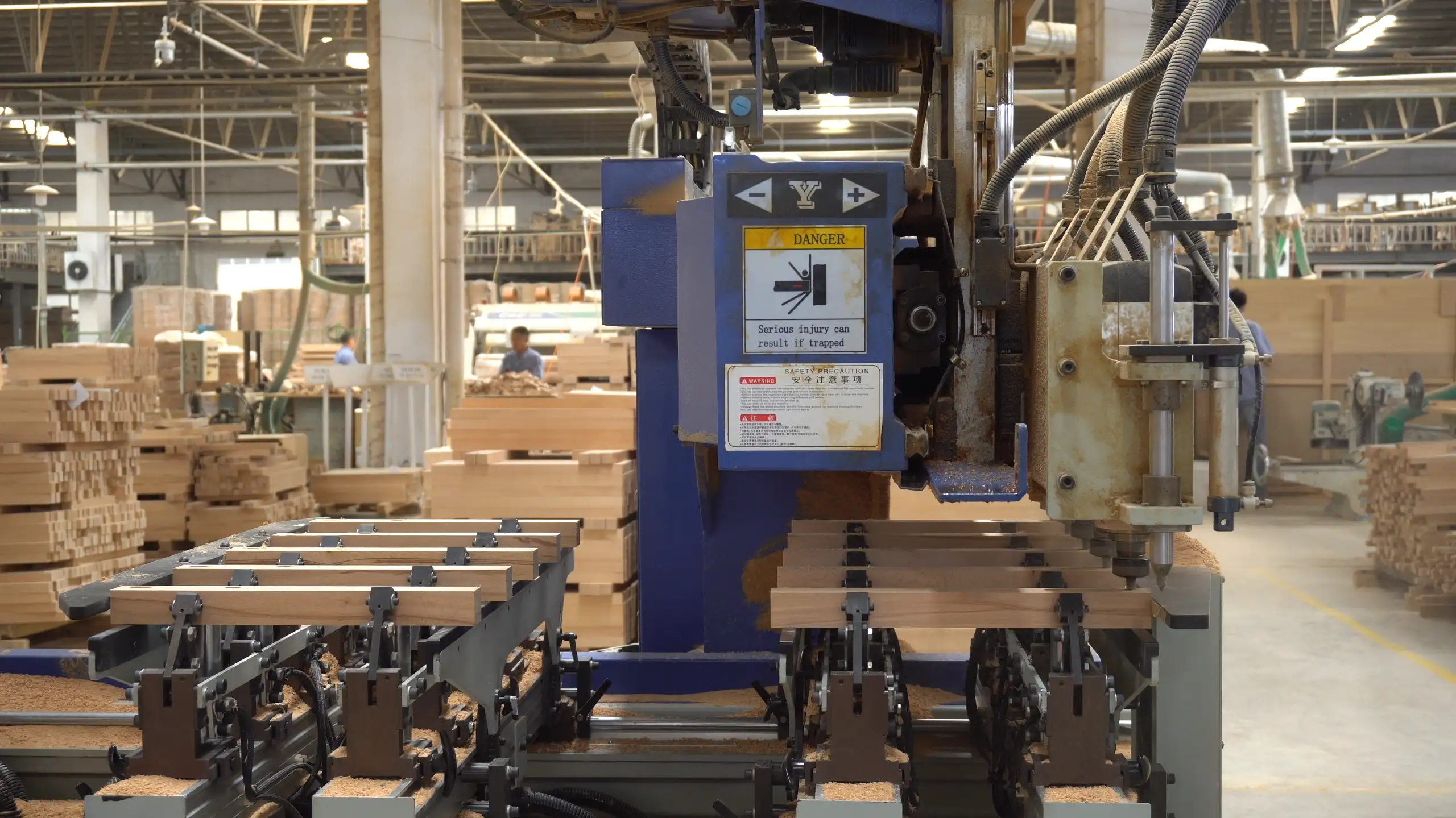
TSXY provides custom furniture solutions for commercial furniture projects, including design review, material selection and production coordination.
Purchasing teams can share their intended venue application, chair specifications, finish references and required quantities when discussing suitable banquet furniture options.
8. When Are Stackable Banquet Chairs the Right Choice?
Stackable banquet chairs are particularly relevant when a venue regularly changes seating arrangements and needs to store unused furniture between events.
However, the decision should not be based on stacking capability alone.
A ballroom that uses the same seating arrangement for extended periods may prioritize different features from a conference venue that changes layouts every day.
Similarly, a venue with generous storage space may have more flexibility than one with a small equipment room.
Before choosing a model, consider the following questions:
Does the venue rearrange seating frequently?
If so, stacking and handling characteristics may be important purchasing factors.
Is storage space limited?
Request actual stacked dimensions and use them to plan the storage area.
Will the chairs be used for several event formats?
Confirm that the chair dimensions and design suit the expected layouts.
Does the proposed model have a verified stacking specification?
Do not rely on appearance alone. Obtain the manufacturer’s guidance.
Can the venue maintain consistent upholstery and finishes across future orders?
Keep approved samples and finish references for repeat purchasing.
The best choice is not necessarily the chair that produces the tallest stack. It is the model that balances seating requirements, handling, storage and project specifications.
Final Thoughts: Plan for the Entire Event Cycle
The value of stackable banquet chairs becomes clearer when buyers consider the entire event cycle.
Chairs are brought into the room, arranged for guests, moved after the event and stored until the next booking.
Each stage creates its own requirements.
A suitable model should therefore be evaluated for stacking compatibility, handling, dimensions, upholstery protection and finish consistency—not simply for its appearance or quoted price.
For hotel ballroom operators, event venue managers and wholesale buyers, these checks can lead to more informed furniture purchasing decisions.
Explore TSXY’s commercial furniture catalogue to review banquet chairs and other furniture options, or discuss your project’s stacking, material and quantity requirements through our custom furniture service.