
Table of contents
- Start with the Restaurant Layout, Not the Table Design
- Round, Square or Rectangular Tables?
- How Much Tabletop Space Does Each Guest Need?
- The Tabletop Material Affects Daily Maintenance
- Why Table Bases Deserve More Attention
- Edge Details Can Make a Big Difference
- What Should Buyers Test Before Bulk Production?
- Ordering Tables for Multiple Restaurant Locations
- Choose Restaurant Tables for the Way They Will Be Used
A restaurant table may look simple compared with an upholstered chair or a custom booth, but it has a direct influence on nearly every part of the dining experience. Guests need enough space for meals and drinks, staff need clear access around the tables, and operators need surfaces that can withstand frequent cleaning and everyday use.
For restaurant owners and procurement teams choosing restaurant tables, the challenge is finding the right balance between seating capacity, table dimensions, surface materials and base stability.
A well-chosen table should work with the restaurant layout, complement the seating and remain practical long after opening day.
Start with the Restaurant Layout, Not the Table Design
Before selecting tabletop finishes or base styles, consider how the dining space will actually operate.
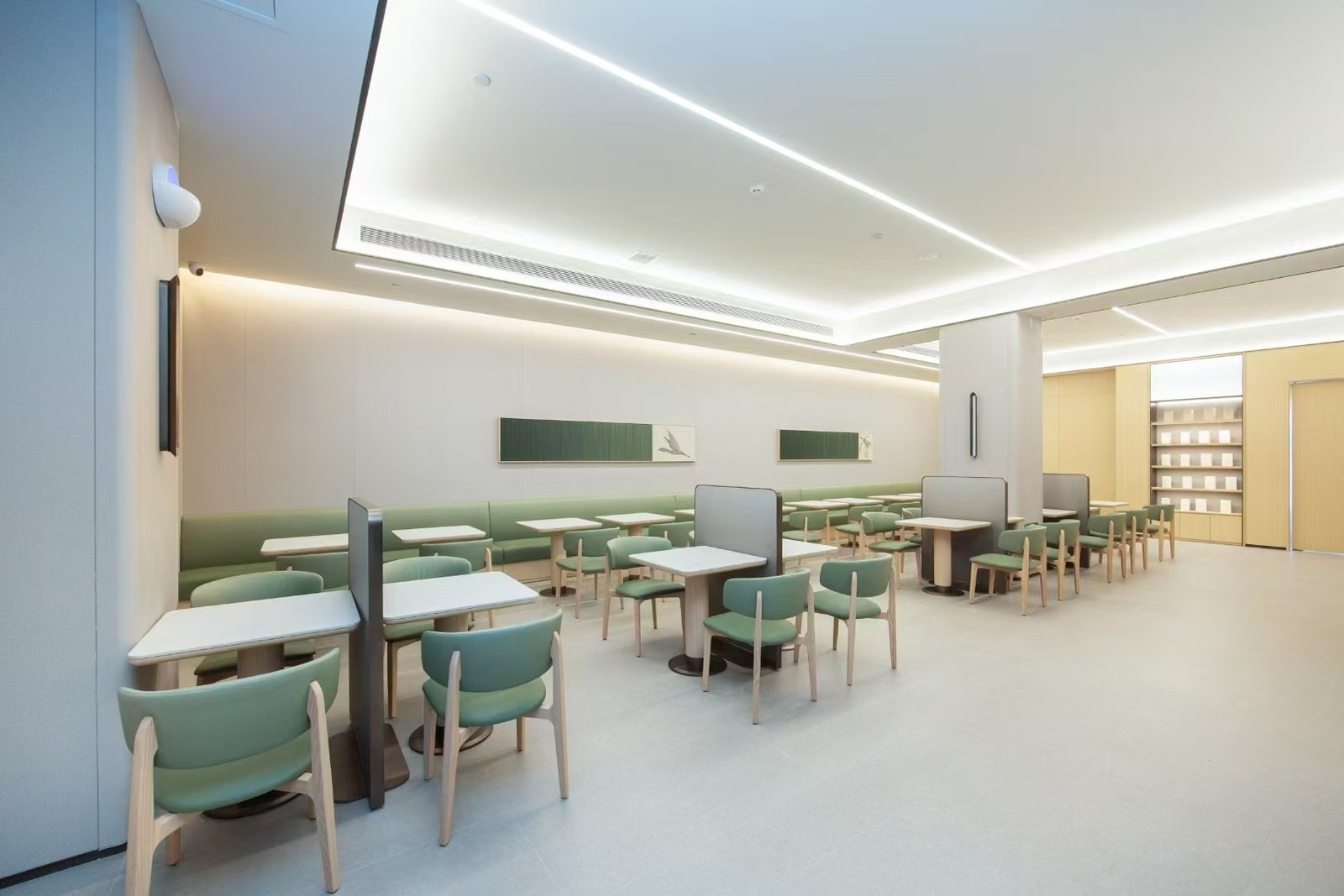
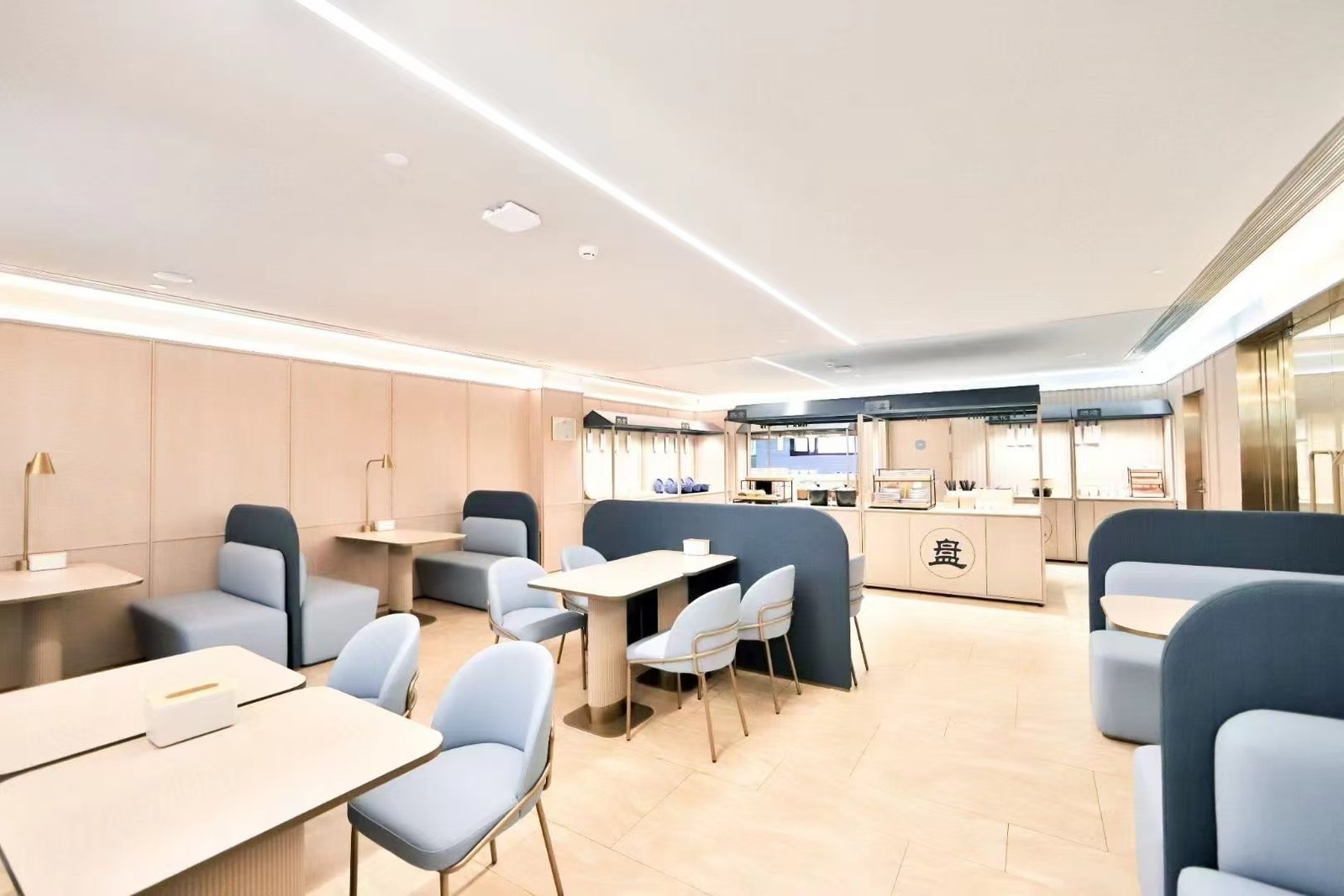
A compact café may need small two-person tables that can be rearranged. A family restaurant may require larger tables for group dining. A full-service restaurant may want more generous tabletop space for multiple courses and table settings.
These different needs affect table shape, size and placement.
| Restaurant setting | Common table requirement | Main consideration |
|---|---|---|
| Small café | Compact two-person tables | Flexible layouts and circulation |
| Casual dining | Mix of two- and four-person tables | Seating capacity and practical cleaning |
| Family restaurant | Larger tables for groups | Comfortable dining space |
| Fine dining | More generous tabletop area | Table settings and guest comfort |
| Hotel restaurant | Coordinated table sizes and finishes | Consistency across dining areas |
| Multipurpose dining room | Tables that can be rearranged | Handling and layout flexibility |
A table that works in a showroom may not work in a crowded dining room.
Before approving the order, position the proposed tables and chairs on the actual floor plan. Consider where guests enter, where servers walk and how chairs move when occupied.
Round, Square or Rectangular Tables?
Table shape affects both the appearance and flexibility of the dining area.
Square Tables
Square tables are commonly used for two-person and four-person arrangements, depending on their dimensions.
They can be useful when operators want to combine tables for larger groups. However, the tabletop edges and base configuration should allow tables to sit together without excessive gaps or interference.
Round Tables
Round tables can create a more conversational setting and eliminate sharp corners from the tabletop outline.
They may work well in cafés, smaller dining groups and spaces where visual softness is important.
The downside is that round tables do not always use rectangular floor areas as efficiently as square or rectangular arrangements.
Rectangular Tables
Rectangular tables are commonly selected for larger dining groups or layouts arranged along walls.
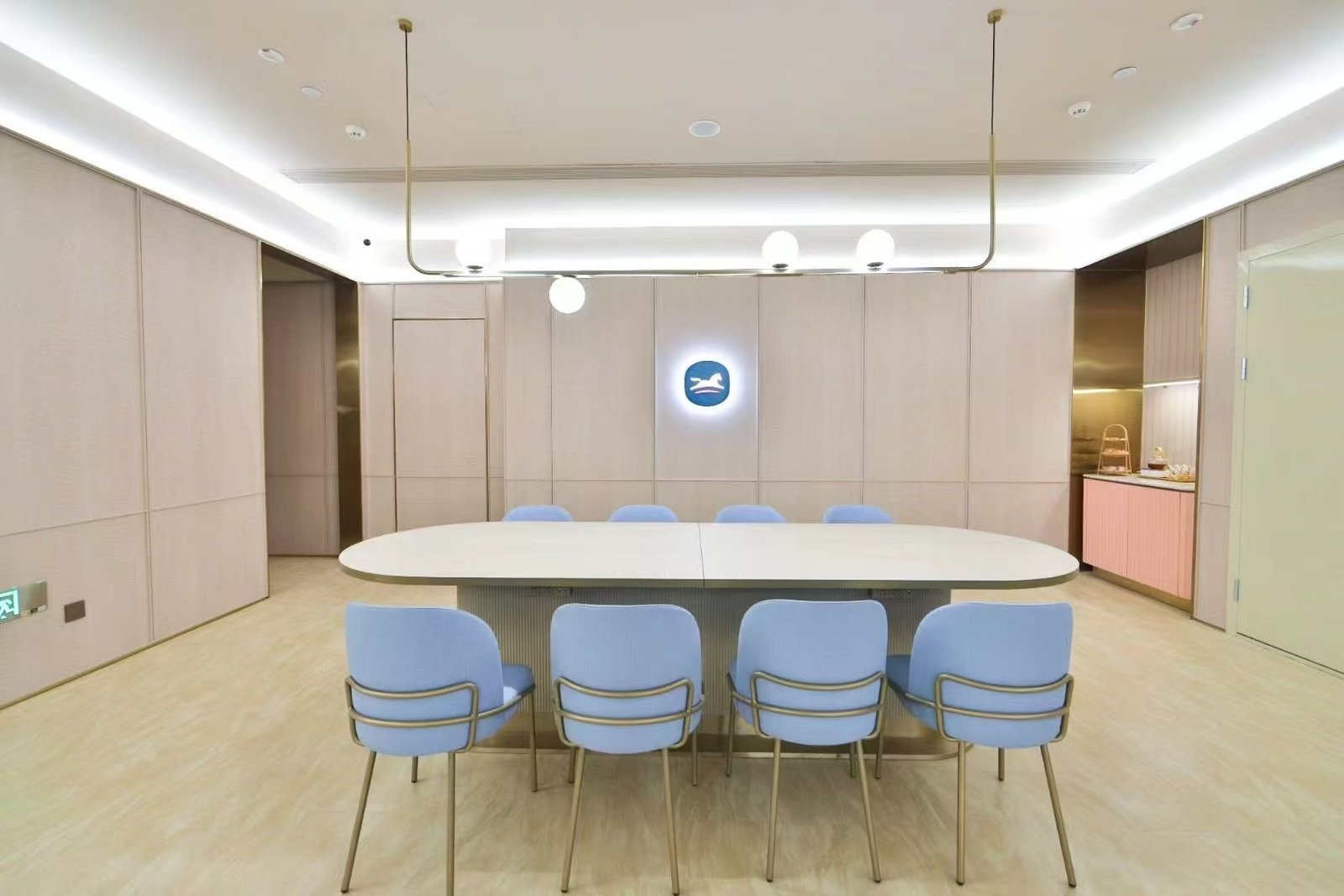
Their proportions can make them suitable for four-person, six-person or larger configurations, depending on the actual dimensions and seating style.
Long tables also require careful consideration of base placement and support.
The best table shape is determined by the room layout and intended seating arrangement, not by appearance alone.
How Much Tabletop Space Does Each Guest Need?
Buyers often select table sizes based on the number of seats they want to provide.
That is a useful starting point, but it should not be the only consideration.
The amount of tabletop space required depends on the dining concept, tableware, food presentation and how many items are usually placed on the table at once.
A coffee shop serving drinks and light snacks may require less tabletop area than a restaurant serving several dishes to each guest.
The dimensions below are general planning references rather than fixed commercial standards.
| Seating arrangement | Illustrative tabletop size | Points to evaluate |
|---|---|---|
| Two-person square | Around 600–750 mm square | Drinkware, plates and compact seating |
| Two-person round | Around 600–800 mm diameter | Space for food and table accessories |
| Four-person square | Around 800–900 mm square | Comfortable placement of four settings |
| Four-person rectangular | Around 1200 × 750 mm | Dining space and chair positioning |
| Larger group table | Project-specific | Serving style, support and circulation |
These examples should be checked against the intended chair dimensions and local layout requirements.
A table can be large enough for four plates but still feel uncomfortable if the chairs are too wide or if the base interferes with legroom.
For this reason, buyers should review tables and chairs as a combined arrangement rather than as separate products.
The Tabletop Material Affects Daily Maintenance
In commercial dining spaces, tabletops experience repeated contact with dishes, drinks, cleaning materials and customers’ belongings.
The surface material has a direct influence on appearance, cleaning requirements and long-term maintenance.
There is no single tabletop material suitable for every restaurant.
Laminate Tabletops
Laminate surfaces can be practical for restaurants looking for a broad range of finishes and straightforward maintenance.
However, buyers should check the type of laminate, substrate construction and edge treatment. Performance depends on the complete tabletop specification rather than the decorative surface alone.
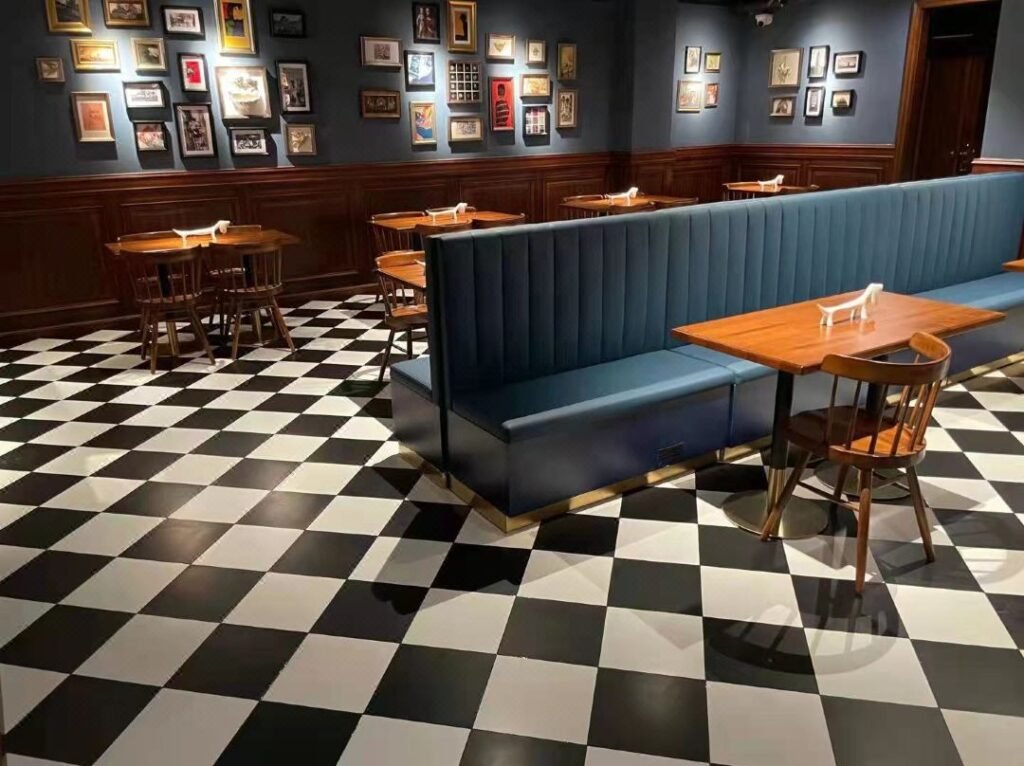
Solid Wood and Wood Veneer
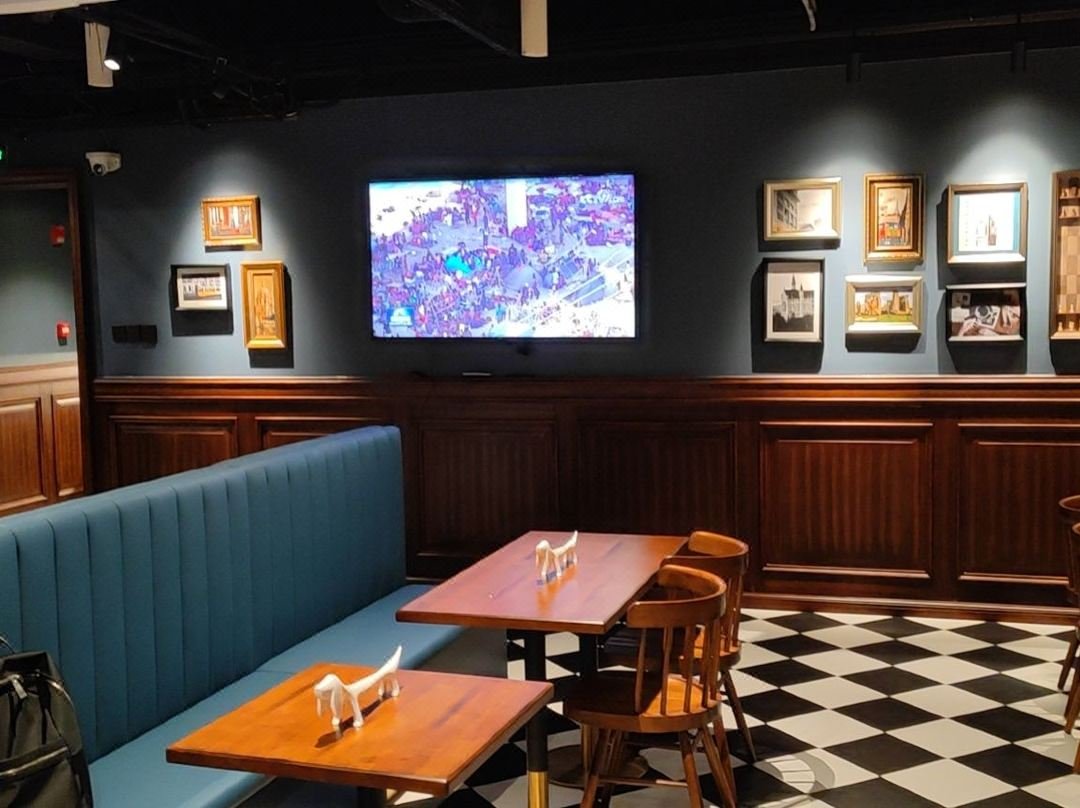
Wood surfaces are often selected for restaurants that want a natural material appearance.
Solid wood and veneer should not be treated as identical.
Solid wood can respond to changes in humidity and temperature, while veneer performance depends on the substrate, adhesive, edge treatment and protective finish.
Both can be suitable for commercial furniture when specified appropriately.
Stone-Look and Other Decorative Surfaces
Some restaurant interiors require marble-look, stone-look or other decorative surfaces.
The actual material may differ considerably from its visual appearance.
A stone-look laminate, engineered surface and natural stone top can have different weight, edge, cleaning and support requirements.
Buyers should verify the real construction rather than relying on an image or finish name.
| Material option | Main benefit | What buyers should check |
|---|---|---|
| Laminate | Variety of finishes and practical maintenance | Substrate, edge protection and cleaning compatibility |
| Solid wood | Natural appearance | Protective finish and movement with humidity |
| Wood veneer | Wood appearance with engineered construction | Substrate, veneer quality and edge detailing |
| Stone-look surface | Decorative appearance | Actual material, weight and maintenance |
| Metal tabletop | Suitable for selected design concepts | Finish, surface temperature and cleaning requirements |
When comparing quotations, the description “wood finish tabletop” is not specific enough.
The quotation should identify the material construction, surface treatment, thickness and relevant edge details.
Why Table Bases Deserve More Attention
A table with an attractive top can still become a daily problem if the base is unstable.
Guests notice immediately when drinks move across a wobbling table or when the tabletop shifts under normal use.
Base selection should account for the size and weight of the tabletop, the location of the support points and the intended floor conditions.
Pedestal Bases
Pedestal designs can provide a clean appearance and may allow more flexible chair placement around the table.
However, the base footprint and supporting structure need to be appropriate for the tabletop dimensions and expected use.
A pedestal that works with a small café table should not automatically be used beneath a much larger top.
Four-Leg and Multiple-Support Bases
Four-leg designs may work well for many rectangular or larger table arrangements.
Their suitability still depends on the frame geometry, fixing points and leg positions.
For long tables, additional supports may be necessary depending on the construction and material of the tabletop.
Adjustable Feet and Floor Conditions
Restaurant floors are not always perfectly level.
Where appropriate, adjustable feet can help operators correct minor wobbling without placing temporary materials beneath the table legs.
Before approving a table base, buyers should review the complete table assembly rather than inspecting the top and base separately.
A stable commercial table is the result of a suitable tabletop, base and connection system working together.
Edge Details Can Make a Big Difference
Table edges receive regular contact from chairs, clothing, cleaning equipment and tableware.
They are also vulnerable areas when cleaning moisture reaches exposed substrate materials.
This makes edge construction an important part of the specification.
For laminate and engineered wood tabletops, buyers should review how the edge is sealed and how the selected edge material connects to the surface.
For wooden tabletops, the edge profile and protective finish affect both appearance and maintenance.
Rounded or softened edges may be appropriate for some dining environments, while square profiles may be preferred for a particular design.
The best option depends on the material, dining concept and expected frequency of use.
During sample approval, inspect the edge from several angles and check for uneven finishing, exposed substrate or visible gaps.
Also consider how the edge will behave when tables are moved or placed next to one another.
What Should Buyers Test Before Bulk Production?
For a large restaurant project, a sample table is an opportunity to verify the complete product before ordering dozens of identical units.
The sample should include the intended tabletop material and base configuration.
Start by placing the table on an appropriate level floor and confirming its overall dimensions.
Then review the following details:
- Tabletop dimensions and thickness
- Surface material and approved finish
- Edge profile and edge sealing
- Base material and protective coating
- Connection between tabletop and base
- Legroom with the selected dining chairs
- Floor glides or adjustable feet
- Cleaning and maintenance instructions
- Packaging and assembly requirements
Where structural performance or other compliance requirements apply, relevant testing information should be requested rather than relying only on an informal stability check.
For custom projects, an approved sample can also help confirm the final appearance before the main production order begins.
Keeping the sample specification connected to the purchase order reduces uncertainty when several table sizes or finishes are included.
Ordering Tables for Multiple Restaurant Locations
Restaurant groups face another challenge: maintaining consistent furniture across different locations and purchase orders.
A table model supplied today may be required again when a new location opens.
If the tabletop finish, edge thickness or base proportions change, the replacement tables may no longer match the original interior.
Before confirming a bulk order, record the essential specifications.
These should include the model reference, dimensions, tabletop construction, edge profile, base design, surface finish and approved sample details.
For customized restaurant furniture, buyers should also clarify which specifications can be repeated and which materials may be subject to future availability.
TSXY provides custom furniture solutions for commercial dining projects, including discussions about dimensions, material combinations, finish coordination and project-specific requirements.
Clear specifications help make the quotation process more transparent and support more consistent bulk purchasing.
Choose Restaurant Tables for the Way They Will Be Used
Restaurant tables influence seating capacity, guest comfort, daily cleaning and the overall dining experience.
A suitable table should fit the actual floor plan, provide enough space for the intended dining style and work comfortably with the selected chairs.
Its tabletop material should match the restaurant’s maintenance expectations, while its base should provide appropriate support and stability.
Before placing a large order, evaluate the complete table rather than treating the tabletop and base as unrelated components.
For Restaurant tables, contractors and purchasing teams, this approach makes it easier to compare designs, confirm specifications and reduce avoidable problems after installation.
Explore TSXY’s commercial restaurant furniture collection for restaurant tables, seating and coordinated furniture options, or contact our team to discuss your project requirements.