
Table of contents
- Should Buyers Start with Price or Manufacturing Capability?
- How Can You Tell Whether a Supplier Understands Hotel Projects?
- Should Every Supplier Quote the Same Specification?
- How Important Is Sample Development?
- What Should Buyers Look for in Quality Control?
- Does Communication Really Matter as Much as Factory Size?
- What Should Buyers Ask About Production Capacity and Lead Time?
- How Should Buyers Compare the Final Shortlist?
- The Right Supplier Should Make the Project Easier to Control
Finding the best hotel furniture suppliers for a project is rarely about choosing the factory with the biggest catalog or the lowest first quotation.
Hotel furniture orders usually combine casegoods, beds, tables, seating, upholstery, different room types and project-specific finishes. A supplier that performs well on one standard product may not necessarily be suitable for coordinating an entire hospitality furniture package.
For buyers, the better approach is to compare suppliers around the actual project: what needs to be customized, how the furniture will be approved, how bulk consistency will be controlled and what happens when specifications change during development.
Should Buyers Start with Price or Manufacturing Capability?
Manufacturing capability should normally come first.
A quotation has limited value if the supplier cannot manufacture the required construction, finish or quantity consistently.
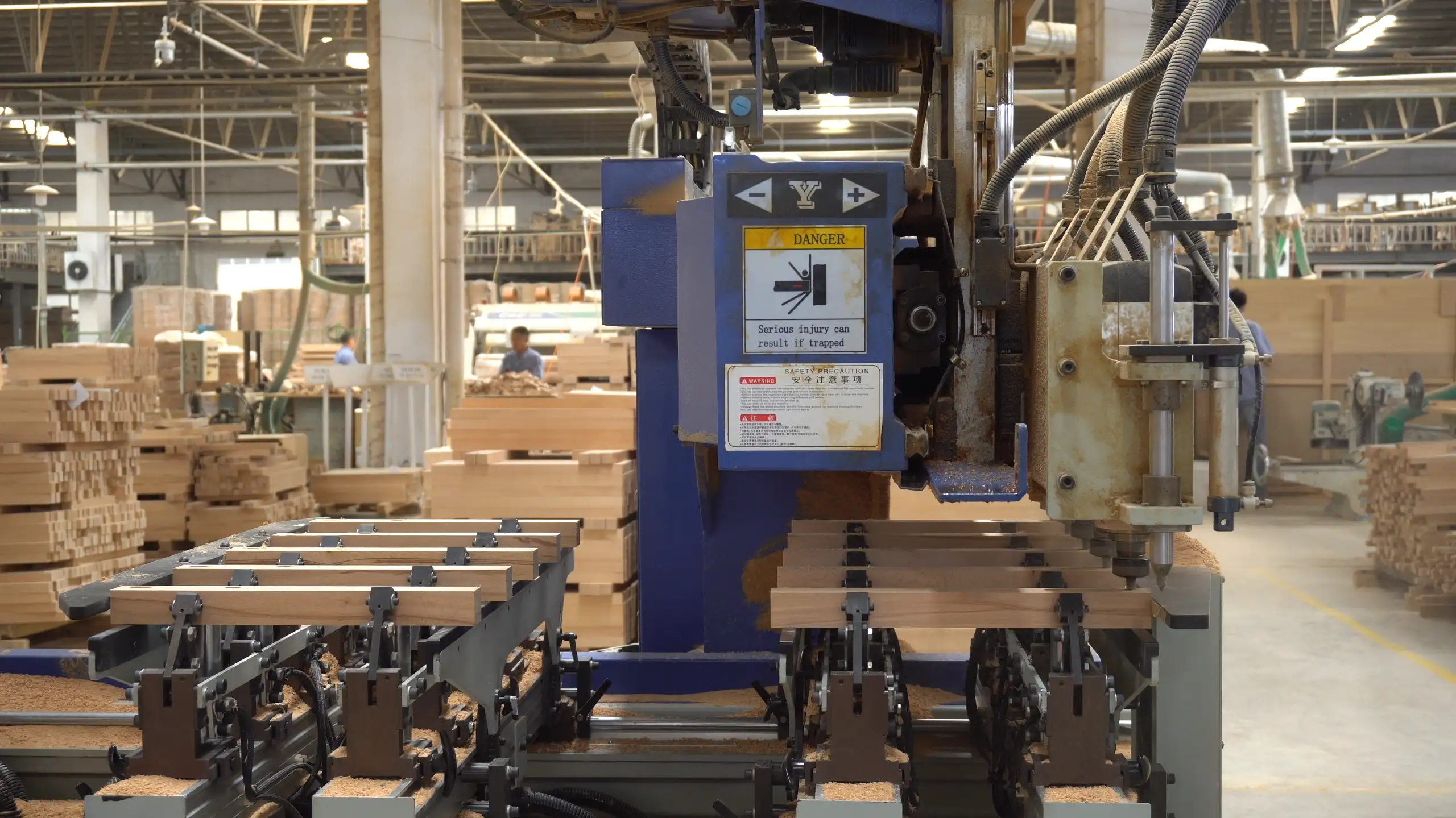
Before spending too much time comparing unit prices, buyers should understand what the supplier actually produces.
For a hotel project, this may include:
- wood and panel casegoods
- metal furniture frames
- upholstered chairs and sofas
- bed frames and headboards
- tables and table bases
- custom finishes and materials
A supplier does not necessarily need to manufacture every component inside one building, but there should be a clear system for coordinating different production processes.
Buyers can also review a supplier’s factory and manufacturing capabilities before moving into detailed quotation discussions.
How Can You Tell Whether a Supplier Understands Hotel Projects?
One useful sign appears very early in the conversation: the questions the supplier asks.
If the response to a hotel inquiry is simply:
“Please send quantity and we will quote.”
the supplier may be treating the project like a standard product order.
A project-oriented supplier is more likely to ask about:
- BOQ or furniture schedule
- room types
- drawings and dimensions
- materials
- finish references
- fabric requirements
- target delivery date
- destination market
These questions are important because hotel furniture cannot always be priced correctly from a reference image alone.
A useful sign
The supplier points out missing information before quoting and explains which assumptions are being used for the preliminary price.
A warning sign
The supplier provides an unusually detailed final price immediately even though dimensions, materials and construction have not been confirmed.
Should Every Supplier Quote the Same Specification?
Ideally, yes.
This is one of the most important parts of supplier comparison.
Imagine three suppliers quoting the same hotel nightstand.
Supplier A uses plywood with natural veneer. Supplier B uses MDF with veneer. Supplier C uses particleboard with laminate.
The products may look similar in a spreadsheet, but the quotations are not actually based on the same furniture.
The same problem can happen with:
- drawer slides
- hinges
- metal thickness
- foam density
- fabric grade
- surface finish
- packing method
Before choosing a supplier, buyers should bring the important specifications onto the same basis.
If several quotations are already available, our article on how to compare hotel furniture quotations before choosing a supplier explains this process in more detail.
How Important Is Sample Development?
For custom hotel furniture, samples can reveal things that drawings and quotations cannot.
A drawing can confirm dimensions. A material schedule can confirm the specified veneer or fabric. But neither tells the buyer exactly how the finished chair will feel or how the complete cabinet will look when several materials come together.
A sample can help check:
Proportion
Does the furniture feel balanced at full size, or does it look heavier than expected?
Construction
Are joints, hardware and structural details suitable for commercial use?
Finish
Does the wood, metal or upholstery match the approved design reference?
Comfort
For seating, is the seat height, depth, foam and back angle appropriate?
The sample is also a test of the supplier’s development process. If every correction creates confusion or previous revisions repeatedly return, the same communication problem may become much more serious during bulk production.
What Should Buyers Look for in Quality Control?
A supplier saying “we have QC” does not tell the buyer very much.
The more useful question is when quality is checked and what reference the inspection team uses.
For hotel furniture, quality control should ideally connect several stages:
approved drawing → approved materials → approved sample → early production → bulk inspection → packing.
That sequence is important because many problems are much easier to correct before the entire order has been completed.
For example, if the first batch of wardrobes shows a finish difference, the production team can adjust the process before the remaining rooms are produced.
If the same problem is discovered only during final inspection, the cost and schedule impact can be much larger.
Where relevant to the project, commercial furniture performance requirements can also be discussed using recognized references such as BIFMA standards.
Does Communication Really Matter as Much as Factory Size?
For custom projects, often yes.
Hotel furniture specifications rarely remain completely unchanged from the first inquiry to production.
A designer may revise dimensions. A fabric may become unavailable. A finish may need another sample. A room type may be added or removed.
The supplier needs a clear way to control those changes.
Good communication does not mean sending messages constantly. It means important decisions are recorded clearly.
Buyers should be able to identify:
- which drawing version is current
- which sample has been approved
- which finish is final
- which item code belongs to each room type
- which changes affect price or lead time
A large factory with poor revision control can create more project risk than a smaller supplier with a disciplined project-management process.
What Should Buyers Ask About Production Capacity and Lead Time?
“Can you produce this order?” is too broad a question.
The supplier may technically have enough total factory capacity but already be handling several other projects during the same period.
Buyers should instead understand how the project fits into the production schedule.
Useful questions include:
- When can materials be prepared?
- When can samples be completed?
- When can bulk production start?
- Will different furniture categories be produced at the same time?
- How much time is reserved for inspection and packing?
- What happens if sample approval is delayed?
This is particularly important when the hotel has a fixed renovation schedule or opening date.
A slightly longer but realistic lead time is usually more useful than an aggressive delivery promise that cannot be maintained once production begins.
How Should Buyers Compare the Final Shortlist?
By the final stage, two or three suppliers may all appear capable of producing the furniture.
At that point, buyers can compare them across several areas rather than allowing one factor to decide the entire order.
Consider:
Specification accuracy. Does the quotation match what was actually requested?
Sample quality. Can the supplier reproduce the approved design and finish?
Manufacturing fit. Are the required furniture categories within the supplier’s normal capabilities?
Project communication. Are drawings, revisions and approvals controlled clearly?
Quality control. Is inspection integrated into production rather than left until shipment?
Commercial terms. Are price, payment, packing and delivery conditions clear?
Lead time. Does the schedule look realistic for the quantity and level of customization?
No supplier will necessarily be strongest in every category. The objective is to choose the one whose strengths match the risks and priorities of the specific hotel project.
The Right Supplier Should Make the Project Easier to Control
The best hotel furniture suppliers are not automatically the largest factories, the cheapest factories or the companies with the longest catalogs.
For a real hotel project, supplier quality becomes visible in how well the company turns drawings, BOQ, samples and specifications into repeatable furniture.
A strong supplier should help buyers reduce uncertainty before mass production begins rather than creating new questions after the order is placed.
For buyers developing guest rooms, public areas or coordinated furniture packages, TSXY provides custom hotel furniture manufacturing and project support covering casegoods, seating, tables, bed frames and other hospitality furniture.
The final decision should therefore come after comparing not only price, but also manufacturing capability, sample development, communication, quality control and the supplier’s ability to manage the project as a complete package.
You May Also Be Interested In
What Should Buyers Expect from Hotel Room Furniture Suppliers?
How to Choose Hotel Poolside Furniture That Can Handle Daily Use