
Table of contents
- When Does Stackable Seating Make Sense?
- Stackable Does Not Mean Easy to Stack
- How Much Storage Space Can Stackable Chairs Actually Save?
- What Should You Check on the Chair Frame?
- Will Stackable Chairs Be Comfortable Enough?
- Cleaning, Floor Protection and Daily Handling
- A Simple Sample Test Before Ordering
- Should Every Restaurant Choose Stackable Chairs?
- Plan for Bulk Orders and Future Replacements
- Choose Stackable Seating for a Practical Reason
At the end of a busy dinner service, a restaurant team may need to clear part of the dining room for cleaning, rearrange tables for the next day or prepare the space for a private event. In these situations, moving and storing chairs becomes part of the daily operation.
This is where stackable seating can offer a practical advantage. Instead of leaving every chair around a table, staff can move suitable chairs into a compact storage area and return them when needed.
However, choosing stackable dining room chairs involves more than finding a design that can be placed on top of another chair. Buyers need to consider how the chairs stack, how much space they occupy, whether their surfaces are protected during handling and whether they remain comfortable for guests.
Not every restaurant benefits from stackable seating, and not every chair marketed as stackable performs equally well in daily commercial use.
When Does Stackable Seating Make Sense?
Consider three different restaurant environments.
A café with a fixed layout may rarely move its furniture. The same tables and chairs stay in place every day, and storage efficiency is not a major concern.
A restaurant with a private dining room has different needs. Chairs may be added or removed depending on the size of a group, and the room may serve several functions throughout the week.
A cafeteria or event-oriented dining space may need to clear large areas frequently for cleaning, maintenance or other activities.
In the second and third situations, stacking chairs can make furniture management easier.
| Dining environment | How seating is used | Potential value of stackable chairs |
|---|---|---|
| Small café | Mostly fixed table arrangements | Limited unless spare chairs need storage |
| Casual restaurant | Occasional layout changes | Useful for flexible seating arrangements |
| Private dining room | Different group sizes and events | Helps manage extra seating |
| Cafeteria | Frequent cleaning and rearrangement | Can reduce occupied floor space during clearing |
| Multipurpose dining area | Regular changes between functions | Supports more flexible room use |
| Fine-dining restaurant | Seating often remains in place | Comfort and appearance may take priority |
The first question should therefore be how often the restaurant actually needs to move or store its chairs.
If the layout rarely changes, a conventional restaurant chair may be equally suitable.
Stackable Does Not Mean Easy to Stack
Two chairs may look similar but behave very differently when stacked.
Some designs use shaped frames that allow one chair to nest into another. Others rely on specific contact points that keep the legs and seats separated.
If these details are poorly designed, chairs may become difficult to separate, tilt when stacked or develop marks where components rub together.
Look at the Contact Points
When one chair is placed on another, certain parts of the frame carry the contact load.
These points should be designed to avoid unnecessary pressure on upholstered seats, decorative surfaces or vulnerable edges.
Depending on the chair design, protective spacers or contact components may be used to reduce surface damage.
Buyers should inspect the actual contact points rather than assuming that a powder-coated or wooden finish will remain undamaged during repeated stacking.
Check the Approved Stacking Limit
A supplier should specify whether a chair is stackable and, where applicable, the recommended maximum stacking quantity.
That limit should not be guessed from appearance.
Frame geometry, chair weight and the intended storage method can all affect how many chairs can be stacked safely.
A chair that can physically fit on top of another is not automatically suitable for tall stacks.
How Much Storage Space Can Stackable Chairs Actually Save?
Stackable seating can reduce the floor area occupied by spare chairs, but the amount saved depends on the product dimensions and stacking geometry.
For example, a chair with a wide leg arrangement may still require a relatively large storage footprint even when several units are stacked.
Another design may occupy less floor area but become inconvenient to handle because of the height or weight of the stack.
When comparing options, request the following information from the supplier:
- Overall chair width, depth and height
- Dimensions of the chair stack at the proposed quantity
- Recommended maximum stacking quantity
- Approximate chair weight
- Space required for staff to lift and separate chairs
- Any special handling or storage requirements
A useful way to evaluate storage efficiency is to mark out the proposed storage area on the floor.
Then compare it with the actual dimensions of the intended chair stack, including enough clearance for staff to move the chairs safely.
This produces a more practical answer than relying only on a catalogue claim that the chair is space-saving.
What Should You Check on the Chair Frame?
A stackable chair has to perform two functions: provide reliable seating and tolerate the handling associated with stacking and unstacking.
These are related but different requirements.
The chair frame should be evaluated for normal seating performance, while its stacking design should be reviewed separately.
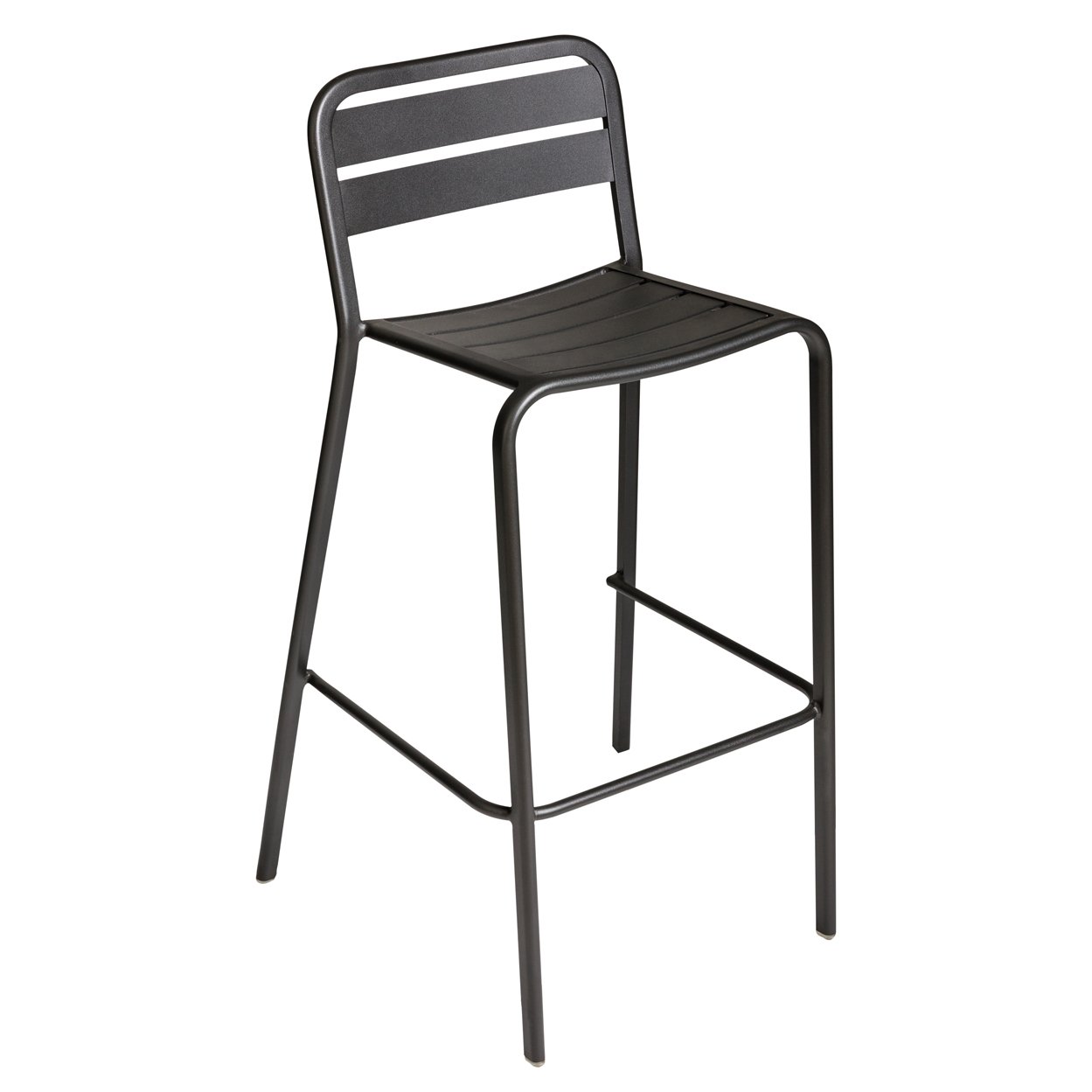
For metal-frame chairs, examine the leg geometry, joints, protective coating and areas where one chair contacts another.
For wooden chairs marketed as stackable, confirm that the design is specifically intended for stacking. Many wooden dining chairs are not suitable for this purpose, even if their shapes appear relatively simple.
The backrest also deserves attention. It should not be used as an improvised lifting point unless the manufacturer’s handling instructions permit it.
The ability to stack should be a documented product feature, not something the buyer assumes from a photograph.
If a supplier cannot confirm the recommended stacking method and limits, the chair should not be purchased on the expectation that it can be stacked safely.
Will Stackable Chairs Be Comfortable Enough?
Storage efficiency has little value if guests find the seating uncomfortable.
Some stackable chair designs prioritize compact construction, manageable weight and simple shapes. Those characteristics can be useful, but they do not automatically produce a comfortable dining chair.
Seat height, depth, backrest angle and the relationship with the dining table remain important.
For restaurants where guests typically remain seated for longer meals, comfort should be tested with the intended table.
Upholstered stackable chairs may offer additional cushioning, but buyers should confirm how the upholstered surfaces are protected when chairs are stacked.
The upholstery must not be compressed or scraped in ways that conflict with the manufacturer’s design.
Compare the Full Dining Experience
A practical test should involve more than sitting in the chair for a few seconds.
Ask several people to sit, stand, pull the chair away from the table and return it to its normal position.
Then have staff stack and separate the chairs following the supplier’s instructions.
A suitable product should work for both guests and staff.
Cleaning, Floor Protection and Daily Handling
Stackable chairs are often selected because a dining area needs to be cleared regularly.
That makes handling and cleaning important purchasing factors.
If the chairs are too heavy or awkward to move, staff may not use the stacking feature as frequently as expected.
If the protective feet wear quickly, repeated movement may create noise or damage sensitive flooring.
Buyers should confirm whether the chair uses replaceable floor glides and whether those components suit the intended floor surface.
Surface finishes should also be compatible with the restaurant’s cleaning procedures.
| Component | What to evaluate |
|---|---|
| Chair frame | Handling weight and accessible gripping areas |
| Floor glides | Floor compatibility and replacement options |
| Stacking contact points | Protection against rubbing and surface damage |
| Upholstery | Cleaning requirements and stacking clearance |
| Frame finish | Resistance to expected handling and cleaning |
| Storage arrangement | Stack stability, handling access and available space |
For restaurants operating near outdoor areas, also confirm whether the chair is approved for outdoor use.
Stackable construction alone does not mean the chair is suitable for rain, sunlight or prolonged outdoor exposure.
A Simple Sample Test Before Ordering
Imagine a restaurant group planning to purchase 120 chairs for a flexible dining space.
The buyer has selected a stackable model based on its appearance and published dimensions.
Before approving the full order, the project team should arrange a sample review that reflects how the furniture will actually be handled.
Begin with a single chair. Check its dimensions, stability, seat comfort and finish against the approved specification.
Review the stacking method. Ask the supplier to demonstrate the correct handling procedure, recommended limit and any required protective components.
Inspect contact surfaces. Check whether stacking creates pressure on upholstery, visible rubbing or interference between frames.
Evaluate handling. Have the intended operators lift, stack and separate the chairs using the approved method.
Check storage requirements. Measure the resulting stack and verify that it can be stored and moved within the planned area.
Record the approved configuration. Keep the model, dimensions, finish specification, stacking instructions and approved sample details together.
Where the project has specific safety or durability requirements, buyers should also request applicable testing information.
A short demonstration can reveal practical handling issues, but it does not replace appropriate structural or safety evaluation.
Should Every Restaurant Choose Stackable Chairs?
No.
Stackable seating solves a particular operational problem: it helps restaurants manage furniture when chairs regularly need to be stored, relocated or rearranged.
For a fixed dining room, the benefits may be limited.
A restaurant with long dining times may prefer larger upholstered chairs or armchairs that are not designed for stacking.
A multipurpose hospitality venue may find compact stackable chairs far more useful, especially where extra seating is needed only for particular events.
Before deciding, compare four things:
- How often the seating layout changes
- How much storage space is available
- How chairs will be handled by staff
- Whether comfort and appearance meet the restaurant’s requirements
The most suitable solution may involve a combination of stackable and conventional chairs rather than using one seating type throughout the entire venue.
Plan for Bulk Orders and Future Replacements
For large restaurant projects, furniture specifications should remain consistent across the order.
If a stackable model is selected, the approved reference should identify more than its appearance.
Include the chair dimensions, materials, finish, floor glides and documented stacking configuration.
If upholstery or frame finishes are customized, confirm that those changes do not affect the stacking clearance or handling requirements.
For restaurant groups planning future locations, consistent product references can help maintain matching seating across multiple orders.
TSXY provides custom furniture solutions for commercial and hospitality projects, including discussions about materials, finishes and project-specific requirements.
Where stackable seating is required, buyers should confirm that the proposed model has a suitable and verified stacking design before finalizing the order.
Choose Stackable Seating for a Practical Reason
Stackable chairs can be useful in restaurants that frequently rearrange dining areas, manage spare seating or need easier access for cleaning.
But stacking ability should not come at the expense of chair stability, guest comfort or manageable daily operation.
A good purchasing decision considers the entire process: guests using the chairs, staff moving them, the space required for storage and the maintenance demands of repeated handling.
Rather than assuming every compact dining chair is stackable, buyers should ask for the product’s documented stacking capabilities and test a sample against the real operating environment.
Explore TSXY’s restaurant furniture selection for commercial dining projects, and confirm specific stacking requirements when discussing custom seating or bulk orders.