
Table of contents
- Why Shop Drawings Matter Before Production
- Start with the Dimensions That Affect the Room
- Check the Furniture Against Actual Site Conditions
- Review Materials and Finish Notes Together
- Look Closely at Hardware and Construction Details
- Make Different Room Types Easy to Distinguish
- Confirm Every Revision Before Production Starts
- Use the Approved Drawings as the Production Reference
- A Good Drawing Review Prevents Problems Before They Reach the Factory Floor
Before production starts, the drawing package often becomes the point where design decisions turn into actual furniture. For a hotel project, small details in a drawing can affect room clearance, installation, material selection, hardware and even the final appearance of dozens or hundreds of rooms.
For buyers reviewing hotel furniture shop drawings, the goal is not simply to check whether the furniture looks correct on paper. The more important question is whether the approved drawing gives the factory enough information to produce the same furniture that the project team expects.
A useful rule: If a detail could affect manufacturing, installation, appearance or room usability, it should be clear in the drawing package before production begins.
Why Shop Drawings Matter Before Production
Product images and design drawings are useful during the early stages of a project, but they normally do not contain every detail required for manufacturing. Shop drawings bring those decisions together.
For hotel furniture, this can include overall dimensions, material specifications, edge details, hardware positions, finish references, construction methods and installation requirements.
A good drawing review can also identify problems before materials are purchased or production lines are scheduled. That is much easier to solve than discovering the same issue after the furniture has already been manufactured.
| Drawing information | Why buyers should check it |
|---|---|
| Overall dimensions | Confirms that the furniture fits the intended room and location. |
| Material specifications | Prevents different materials from being used during production. |
| Finish references | Helps maintain appearance across different furniture pieces. |
| Hardware details | Confirms the function and installation position of fittings. |
| Revision information | Helps ensure the factory is working from the latest approved version. |
Start with the Dimensions That Affect the Room
Dimensions should be the first practical check because an attractive piece of furniture is still a problem if it does not fit the room correctly.
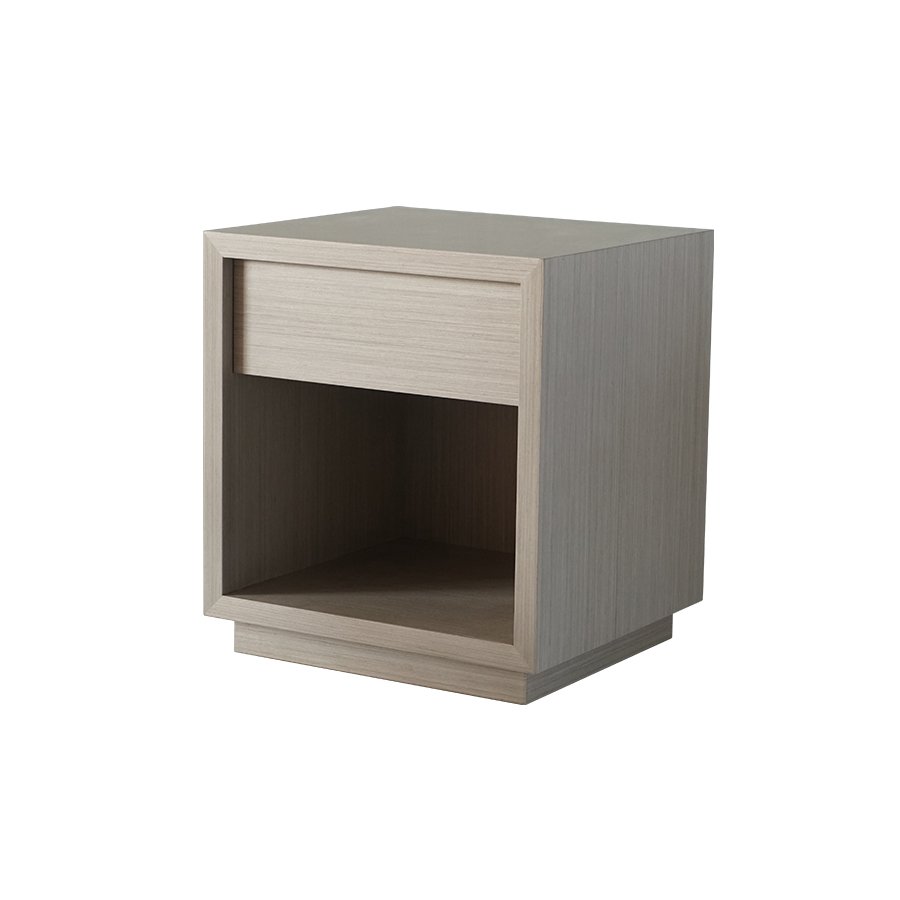
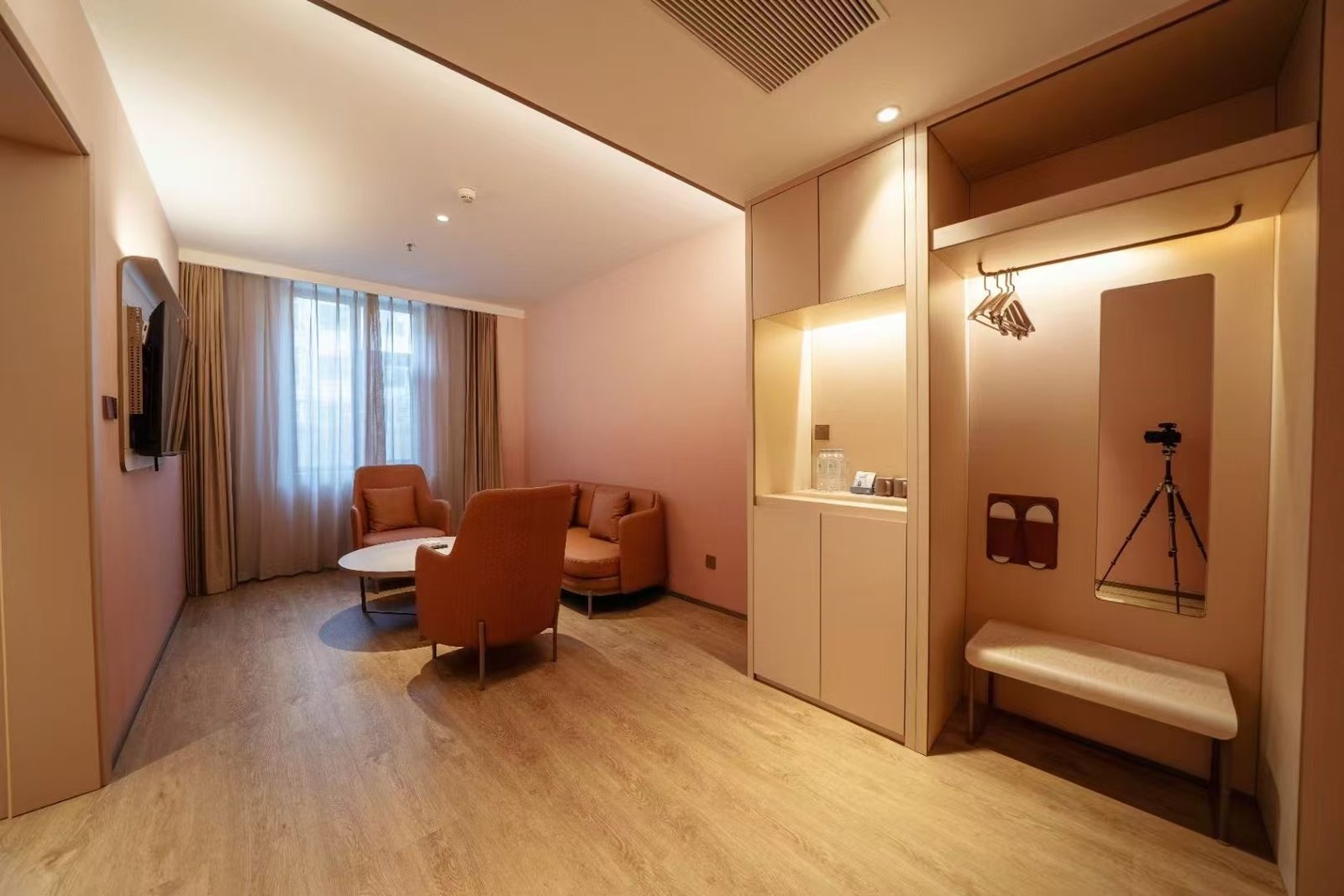
For guest rooms, check the overall width, depth and height as well as the relationship between furniture pieces. Bedside tables, wardrobes, desks, luggage benches and other casegoods should be reviewed against the actual room layout rather than as isolated products.
Pay particular attention to dimensions that affect circulation. A cabinet may technically fit against a wall but still create a problem when a door opens, a chair is pulled out or a guest walks through the space.
If the project includes different room types, do not assume that one drawing applies to all of them. Room types should be clearly identified so that the factory can distinguish between different sizes and configurations.

Check the Furniture Against Actual Site Conditions
A shop drawing can be technically correct while still being unsuitable for the actual project if important site conditions have not been considered.
Wall positions, columns, skirting, electrical outlets, plumbing points, air-conditioning units and other fixed elements can affect furniture dimensions and installation.
This is especially important for built-in or wall-connected furniture. Before approving the drawing, buyers should confirm whether the dimensions are based on architectural drawings, approved site measurements or another reliable project reference.
For project buyers, ask:
- Are the wall dimensions based on the latest project drawings?
- Are electrical or service points shown where they affect the furniture?
- Does the furniture leave enough clearance for doors, drawers and movement?
- Are different room layouts clearly separated?
Review Materials and Finish Notes Together
Dimensions are only one part of the review. Materials and finishes should also be clearly connected to each furniture item.
For example, a casegood may use a combination of wood veneer, laminate, painted panels, metal components and upholstered sections. If the drawing only shows a general color but does not identify the actual material or finish reference, different parts may be interpreted differently during production.
This is particularly important when the same finish appears across several furniture categories. A hotel project may require the finish on a bedside table, desk, wardrobe and cabinet to remain visually consistent even though the construction of each item is different.
For larger hotel cabinets and other casegoods, the drawing should make the major material and finish decisions easy to identify rather than leaving them open to interpretation.
Look Closely at Hardware and Construction Details
Hardware is easy to overlook because it often occupies only a small part of the drawing. In daily hotel use, however, these details can have a noticeable effect on durability and maintenance.
Check the location and type of hinges, drawer slides, handles, locks, brackets and other fittings where they affect function or appearance.
For doors and drawers, also consider the opening direction and whether nearby furniture creates interference. A technically correct cabinet can still be inconvenient if two doors or drawers cannot be used comfortably at the same time.
| Detail | What to verify |
|---|---|
| Hinges | Type, position and opening direction |
| Drawer slides | Position, movement and load requirements |
| Handles | Size, location and consistency with the approved design |
| Locks | Location and compatibility with the project specification |
| Installation fittings | How the furniture will be fixed, joined or adjusted on site |
Make Different Room Types Easy to Distinguish
Large hotel orders often include several room types, and this is where drawing control becomes especially important.
A standard room, deluxe room and suite may use similar furniture but with different dimensions, finishes or configurations. If those differences are not clearly identified, production and packing errors become much more likely.
Each drawing should therefore have a clear reference such as the room type, furniture item, drawing number and revision. The same identification should ideally continue through the quotation, purchase order, production documents and packing information.
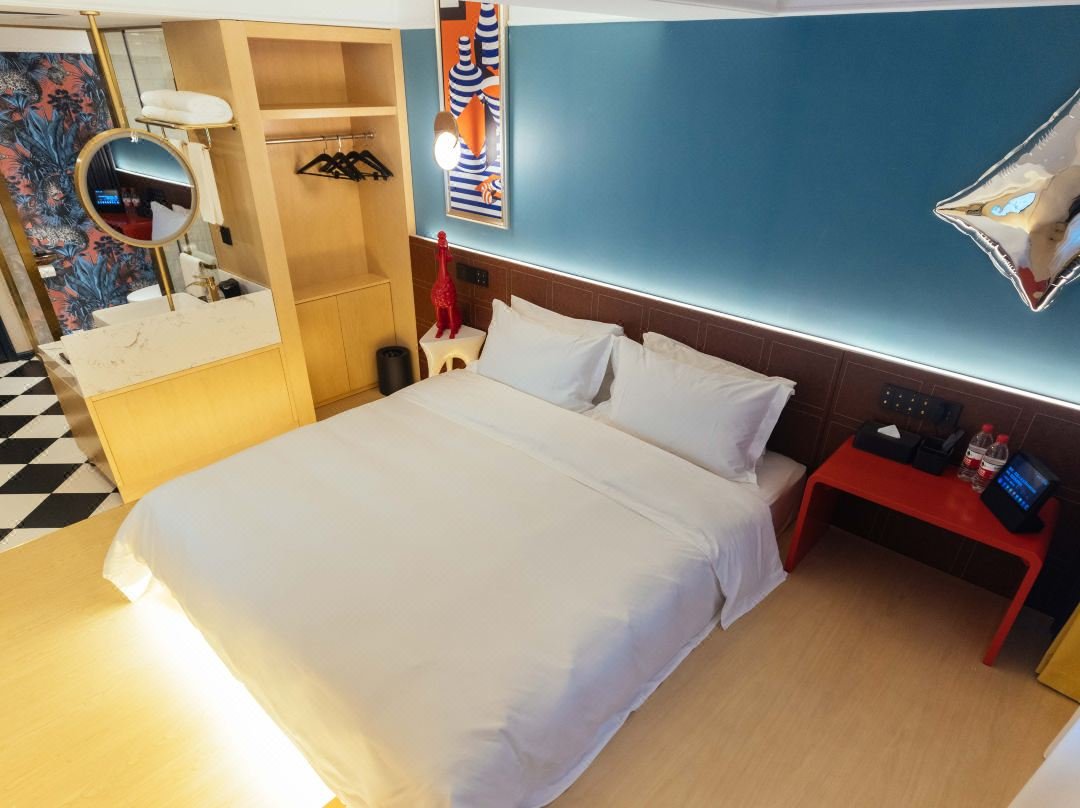
For hotel bed frames, for example, different room types may require different widths, headboard arrangements or bedside configurations. These differences should not depend on verbal instructions alone.
Confirm Every Revision Before Production Starts
One of the most common risks in custom furniture projects is not that the drawing is wrong, but that the factory and buyer are working from different versions.
A project may go through several changes after the first drawing is issued. Dimensions may change, a finish may be replaced, hardware may be updated or a room layout may be revised.
Before approving production, check that the drawing package clearly shows the current revision and that earlier versions are no longer being used as production references.
Before final approval, confirm:
- The drawing number is correct.
- The revision number or date is current.
- All agreed changes have been incorporated.
- Material and finish references match the approved specification.
- The factory has received the same final information as the project buyer.
Use the Approved Drawings as the Production Reference
Once the drawings have been reviewed and approved, they should become part of the controlled production reference rather than remaining only as design documents.
This is particularly important for repeat hotel orders. If the project includes hundreds of similar rooms, the approved drawing provides a fixed reference for dimensions, materials, finishes and construction details.
It also makes later communication easier. If a question appears during production, the team can refer back to the approved drawing instead of relying on memory or scattered messages.
For buyers sourcing custom hotel furniture, this kind of document control is one of the simplest ways to reduce avoidable production changes and keep the final furniture aligned with the original project requirements.
A Good Drawing Review Prevents Problems Before They Reach the Factory Floor
Shop drawing approval should not be treated as a formality between design and production. It is one of the points where buyers can still make changes with relatively low cost and low risk.
The most useful review is not necessarily the longest one. It is the review that checks the details most likely to affect the finished project: dimensions, room conditions, materials, finishes, hardware, room types and revisions.
Once these items are clearly approved, the factory has a much stronger production reference, and the buyer has a clearer basis for checking samples and finished furniture later in the project.