
Table of contents
- Start with the Way the Restaurant Operates
- Check the Frame Before Judging the Appearance
- How Much Space Do Restaurant Chairs Actually Need?
- Metal, Wood or Upholstered Restaurant Chairs?
- Comfort Should Be Tested, Not Assumed
- Small Details That Become Big Maintenance Problems
- What Should Buyers Test Before a Bulk Order?
- Choosing Chairs That Can Be Reordered Consistently
- Make the Chair Work for the Restaurant, Not Just the Design
Restaurant chairs have a demanding job. They are moved, pulled, pushed, cleaned and used by different guests throughout the day. A chair that looks impressive in a product catalogue may not be the best choice for a restaurant serving hundreds of customers each week.
The challenge is finding seating that works for the restaurant’s actual operating conditions. Comfort matters, but so do structural strength, floor space, maintenance and the ability to replace or reorder chairs later.
When comparing restaurant chairs for a commercial dining project, buyers should look at more than the design and unit price. The right choice depends on how the chairs will be used, how the dining area is arranged and what level of maintenance the restaurant can realistically manage.
Start with the Way the Restaurant Operates
Not every restaurant places the same demands on its seating.
In a quick-service restaurant, chairs may be moved frequently as customers come and go. The dining area may also need to be cleaned several times during the day. Easy handling, stable construction and straightforward cleaning are particularly valuable.
A fine-dining restaurant has different priorities. Guests may remain seated for much longer, making back support, seat proportions and upholstery comfort more important.
For cafés and casual dining spaces, the main challenge is often balancing a welcoming appearance with flexible seating arrangements.
| Restaurant type | Seating priorities | What to watch for |
|---|---|---|
| Quick-service restaurant | Durability, compact size, easy cleaning | Chairs that are heavy or difficult to move |
| Casual dining | Comfort, appearance, stable construction | Weak joints and easily damaged finishes |
| Fine dining | Ergonomics, upholstery, design consistency | Poor cushioning and uncomfortable backrests |
| Café | Flexible arrangement, manageable footprint | Oversized chairs that restrict movement |
| High-volume buffet | Frequent movement, cleaning, practical storage | Frames and finishes that wear quickly |
These differences matter when choosing between wooden, metal and upholstered seating. A chair should be evaluated in the context of its intended restaurant rather than simply compared with other chairs in a showroom.
Check the Frame Before Judging the Appearance
The frame is one of the most important parts of a commercial dining chair.
A chair may have an attractive backrest and high-quality upholstery, but its long-term performance depends heavily on the way the frame is constructed and how its components are connected.
What Should Buyers Examine?
For metal chairs, examine the frame connections, welding quality, leg alignment and surface coating. Check whether the chair sits evenly on a flat floor and whether the legs remain stable when the chair is moved or loaded.
For wooden chairs, pay attention to the joinery, reinforcement and the connection between the seat frame and legs. Solid-looking wooden components are not enough if the joints are poorly designed or assembled.
For chairs using a combination of metal, wood and upholstery, inspect the connection points between different materials.
A practical inspection should include:
- Whether the chair stands level without rocking
- Whether the frame feels rigid during normal sitting and movement
- Whether visible joints are clean and properly finished
- Whether the seat is securely connected to the frame
- Whether edges and contact points are smooth
- Whether the construction suits the expected commercial workload
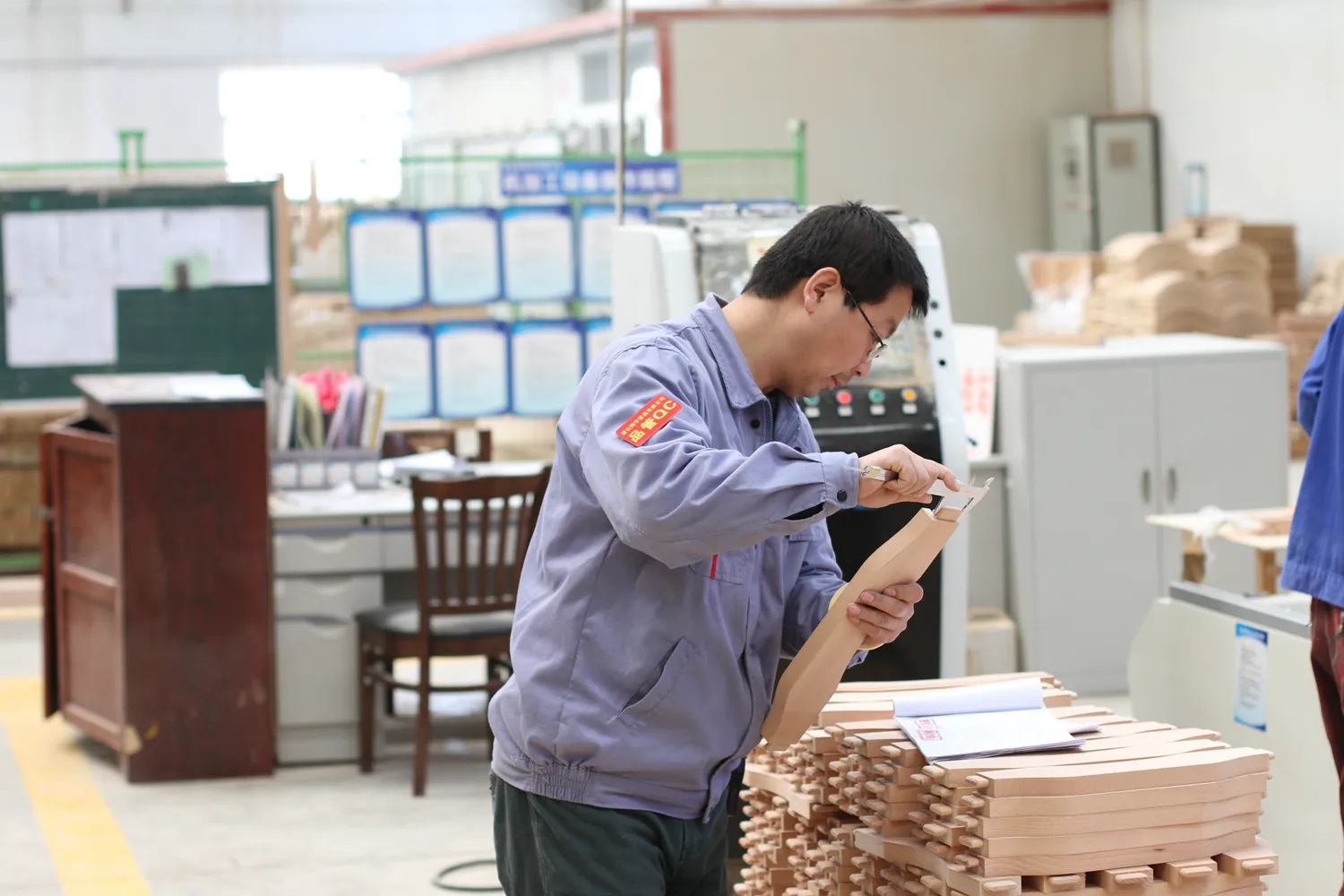
For larger orders, buyers can request relevant durability testing information or arrange project-specific sample testing where necessary. A sample inspection alone cannot establish how a chair will perform over several years, but it can reveal obvious design and construction concerns before bulk production.
How Much Space Do Restaurant Chairs Actually Need?
Chair dimensions affect much more than appearance. They influence the number of seats a restaurant can accommodate, how comfortably guests can move and how efficiently staff can work.
The listed chair width is only one measurement to consider.
An armchair may require additional space because of its armrests. A chair with a sharply angled backrest or rear legs may occupy more floor space than expected. Thick upholstered backs may also reduce usable seating depth when placed against a wall.
Before placing an order, compare the chair’s overall dimensions with the intended dining table and the restaurant floor plan.
Check These Dimensions Together
| Dimension | Why it matters |
|---|---|
| Seat height | Determines the relationship between the chair and tabletop |
| Seat width | Affects guest comfort and spacing between seats |
| Seat depth | Influences sitting posture and clearance |
| Overall width | Determines how many chairs can fit along a table |
| Overall depth | Affects circulation when chairs are occupied or pulled out |
| Armrest height | May determine whether the chair fits under the table |
| Backrest height | Influences comfort, appearance and spatial proportions |
For a typical dining arrangement, the difference between seat height and tabletop height is an important starting point. However, there is no single measurement suitable for every chair design, seat cushion or restaurant concept.
The most reliable method is to test the actual chair and table combination before approving the order.
A comfortable chair can still be unsuitable if guests have difficulty getting in and out of it or if it blocks the main service route.
Metal, Wood or Upholstered Restaurant Chairs?
Material selection is often presented as a simple question of appearance. For commercial projects, it is more useful to consider what each material means for cleaning, construction, comfort and long-term maintenance.
Metal Restaurant Chairs
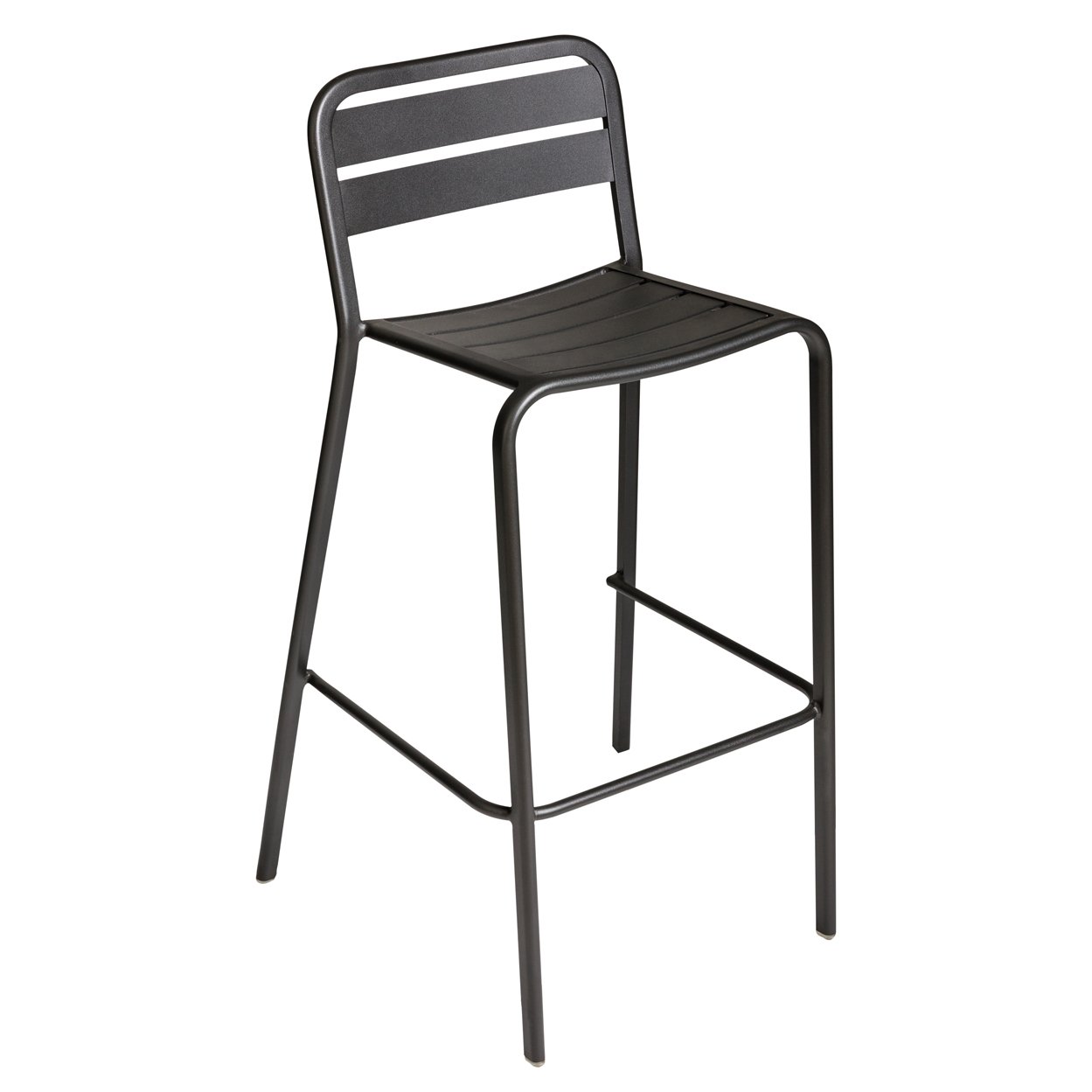
Metal chairs are commonly considered for busy dining environments because they can support relatively slim frame designs and offer different surface-finishing options.
However, durability depends on the actual construction, material thickness, connection details and coating quality. Not all metal chairs provide the same level of performance.
For restaurants where seating is moved regularly, examine the weight of the chair and the way the legs contact the floor.
Wooden Restaurant Chairs
Wooden chairs are often selected for cafés, casual restaurants and dining spaces where a warmer material appearance is important.
They can offer good durability when properly designed and manufactured, but joint construction and protective finishes deserve careful inspection.
Buyers should also consider how the selected finish responds to routine cleaning and everyday contact with tables, footwear and cleaning equipment.
Upholstered Restaurant Chairs
Upholstered seating may provide additional comfort, particularly in restaurants where customers remain seated for longer periods.
The main consideration is that upholstery introduces additional components requiring maintenance.
Fabric or artificial leather selection, seam construction, foam support and cleaning compatibility should all be reviewed.
| Chair type | Common advantages | Main procurement considerations |
|---|---|---|
| Metal frame | Slim designs, varied finishes, potentially easy handling | Welds, coating, stability, floor protection |
| Wooden frame | Warm appearance, broad design possibilities | Joinery, finish wear, maintenance |
| Upholstered seating | Comfort, design flexibility | Cleaning, abrasion, foam and fabric replacement |
| Mixed material | Combines different visual and functional properties | Connections between materials, repairability |
There is no universal winner. A properly manufactured wooden chair may be more suitable than a poorly constructed metal chair, and the opposite may also be true.
The decision should be based on the actual product specification and restaurant operating conditions.
Comfort Should Be Tested, Not Assumed
A chair that feels comfortable for a few seconds may become uncomfortable during a full meal.
Seat depth, backrest angle, cushion firmness and the relationship between the chair and table all influence the sitting experience.
For restaurants expecting longer visits, sample testing is particularly important.
Instead of evaluating a chair only by looking at it, ask several people to sit in the proposed model for a realistic period. Observe whether the backrest provides useful support and whether the seat proportions accommodate different body types.
For upholstered chairs, ask the supplier to clarify the foam and upholstery specifications. A thicker cushion does not automatically mean better comfort or better shape retention.
Also consider whether armrests help the intended dining experience or create limitations. In some restaurants, armchairs provide a more comfortable atmosphere. In others, they reduce seating flexibility and make movement around tables more difficult.
The best commercial dining chair should support the desired experience without interfering with normal service.
Small Details That Become Big Maintenance Problems
When a restaurant orders a few chairs, small design flaws may seem manageable. When the order covers several dining areas or multiple locations, the same flaw can become a recurring maintenance problem.
Consider the bottom of the chair legs.
Without suitable floor-contact components, frequent chair movement may lead to noise, floor damage or premature wear. Floor glides should be appropriate for the chair construction and the flooring used at the site.
Now consider chair weight.
A very heavy chair may feel substantial, but it can be inconvenient for staff who need to rearrange seating every day. A very light chair may be convenient to move, yet still requires careful stability and structural evaluation.
Other details worth checking include:
- Exposed fasteners that could loosen during use
- Sharp edges or poorly finished joints
- Upholstery seams in high-contact areas
- Surface finishes that are difficult to clean
- Components that cannot be replaced easily
- Chair legs that make floor cleaning unnecessarily difficult
These details are rarely the main selling points in a catalogue. Nevertheless, they can influence the real cost of owning restaurant seating.
What Should Buyers Test Before a Bulk Order?
For a restaurant project involving dozens or hundreds of chairs, sample approval provides an opportunity to identify problems before they are repeated across the full order.
The test should reflect actual restaurant use rather than focus only on appearance.
A useful sample review can be organized around the following checks.
| Sample check | Practical evaluation |
|---|---|
| Stability | Place the chair on a level surface and check for unwanted rocking |
| Frame | Inspect visible joints and connections |
| Comfort | Test sitting posture and support with different users |
| Table compatibility | Check seat height, armrest clearance and movement |
| Handling | Move the chair as staff would during service |
| Cleaning | Confirm appropriate cleaning methods for the specified materials |
| Finish | Compare the sample against the approved color and material reference |
| Dimensions | Measure the sample against the approved drawing |
| Floor contact | Review glides or feet against the intended flooring |
If possible, involve both the purchasing team and the people who will operate the restaurant. Their priorities may differ.
A designer may notice finish consistency, while restaurant staff may immediately identify a chair that is inconvenient to move or clean.
Both perspectives are useful before committing to a large quantity.
For projects requiring custom dimensions, finishes or upholstery, buyers can also discuss specifications through TSXY’s Custom Furniture Solutions service.
Choosing Chairs That Can Be Reordered Consistently
A restaurant’s seating requirements may change after opening.
Additional tables may be added, individual chairs may be damaged or a restaurant group may open another location using the same interior concept.
For these situations, consistent product specifications become valuable.
Before approving a model, confirm that its key details can be recorded and referenced for future orders.
These details may include the drawing number, dimensions, frame material, finish code, upholstery reference and approved sample information.
When ordering customized seating, buyers should also discuss the availability of matching components or replacement materials. Future availability is not guaranteed indefinitely, so this should be clarified rather than assumed.
For chain restaurant projects, it is especially useful to maintain a consistent product specification across different purchase orders.
This reduces the risk of receiving chairs that look similar in photographs but differ in seat height, frame proportions or finish appearance.
Make the Chair Work for the Restaurant, Not Just the Design
Choosing restaurant seating is ultimately a balance between appearance, comfort, practical operation and long-term value.
The most suitable chairs are not necessarily the heaviest, most expensive or most decorative models.
They are the chairs that fit the restaurant layout, support the expected dining experience, withstand routine commercial use and can be maintained without unnecessary difficulty.
Before placing a bulk order, buyers should evaluate the frame, dimensions, materials, comfort and maintenance requirements together. A physical sample should confirm that the selected design works with the intended tables and dining space.
For project buyers exploring a wider selection of commercial restaurant furniture, clear specifications and a careful sample review provide a stronger starting point than choosing chairs by appearance alone.