
Table of contents
- Why Restaurant Chairs Wear Out Earlier Than Expected
- Start with the Joints, Not the Thickness of the Legs
- The Seat Can Become a Problem Before the Frame Does
- Stability Is More Than a Chair Standing Still
- What Should a Supplier Be Able to Show You?
- How to Evaluate a Sample Before Placing a Large Order
- Heavy-Duty Does Not Mean Every Restaurant Needs the Same Chair
- Bulk Ordering Requires Consistent Specifications
- Choosing a Chair That Makes Sense Beyond Opening Day
A restaurant chair rarely fails because someone sits on it once. Problems tend to develop after thousands of ordinary movements: guests leaning back, chairs being dragged across the floor, staff stacking or rearranging seating, and repeated cleaning at the end of each service.
A chair may look sturdy when it first arrives but develop loose joints, an unstable frame or worn upholstery much earlier than expected.
For restaurant owners and commercial furniture buyers, choosing heavy duty dining chairs requires looking beyond thick legs, large frames and product descriptions that simply promise durability.
The better approach is to identify where chairs experience stress, understand how the product is constructed and establish practical approval criteria before ordering in quantity.
Why Restaurant Chairs Wear Out Earlier Than Expected
Consider a casual restaurant operating through lunch and dinner every day. A chair may be moved repeatedly between tables, pushed against a wall, pulled backward by one arm or leaned on while guests stand up.
None of these actions seems particularly demanding on its own. Over time, however, they place repeated loads on the frame and connection points.
This helps explain why different components can develop problems at different times.
| Early warning sign | Possible area to investigate | Why it matters |
|---|---|---|
| Chair rocks on the floor | Leg alignment, frame deformation or floor glides | Creates an unstable seating experience |
| Backrest begins to move | Backrest connections and fasteners | Can worsen under repeated leaning |
| Seat feels loose | Seat mounting and support structure | Affects comfort and stability |
| Finish wears around edges | Surface coating and frequent contact areas | Changes appearance and maintenance needs |
| Upholstery loses shape | Foam and cushion construction | Reduces sitting comfort |
| Floor glides wear or detach | Glide material and attachment method | May increase noise and floor damage |
These symptoms are not always evidence of manufacturing defects. Installation conditions, cleaning practices and the way the furniture is used can also contribute.
For buyers, the important point is that heavy-duty performance must be evaluated as a combination of construction, materials and expected usage.
Start with the Joints, Not the Thickness of the Legs
One common assumption is that thicker chair legs automatically mean greater strength.
Leg dimensions matter, but they are only part of the structure. The way the legs connect to the seat frame and backrest can be equally important.
A heavy-looking chair with weak connections may perform poorly, while a relatively slim design with appropriate engineering may handle commercial use successfully.
Metal Frame Connections
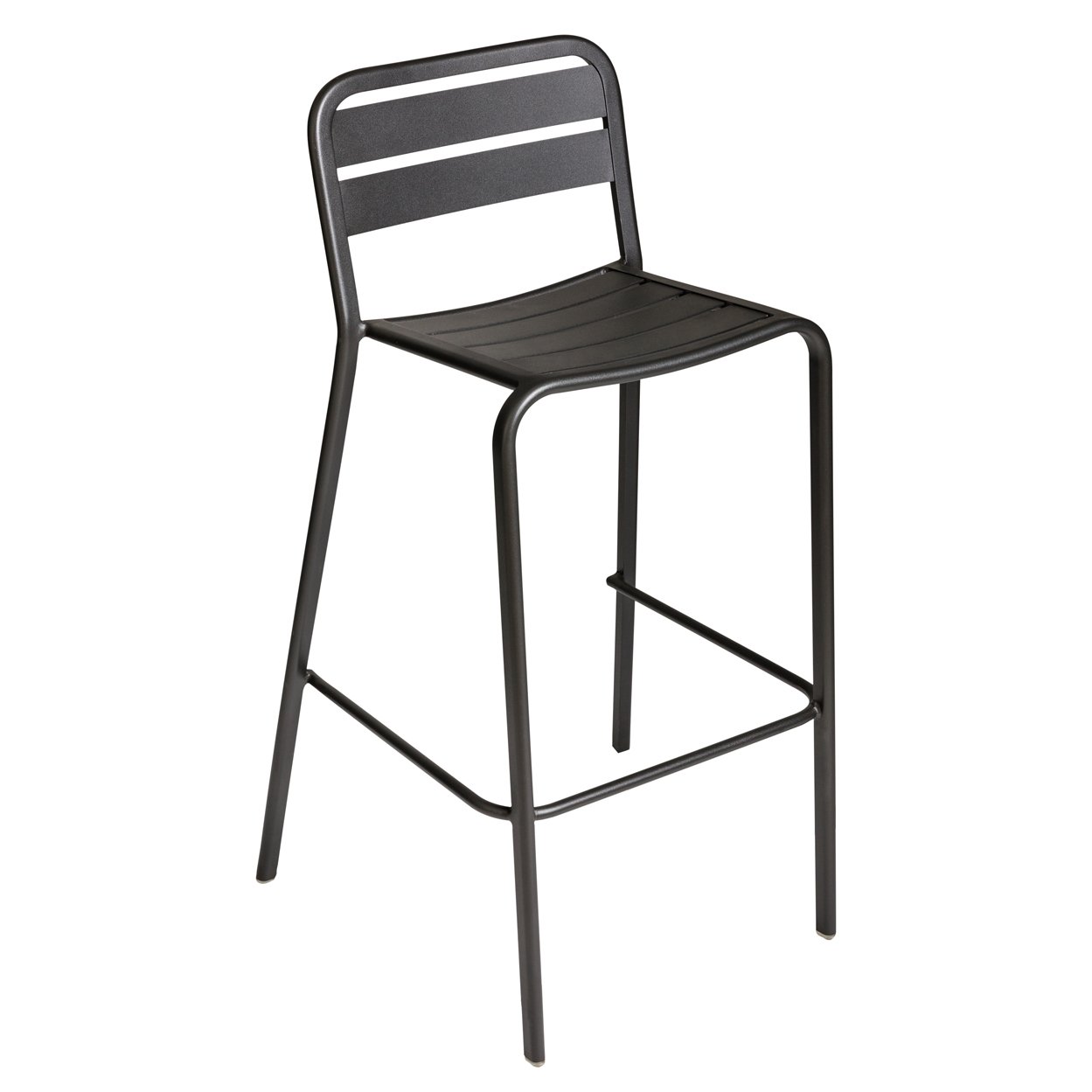
When reviewing a metal-frame chair, look closely at the welded or mechanically assembled joints.
Check whether the chair stands level, whether the frame moves unexpectedly during normal handling and whether visible connections are consistent.
For designs with multiple steel components, buyers should ask the supplier to clarify the construction rather than assuming that all metal chairs use the same materials or manufacturing methods.
Powder coating and other finishes should also be reviewed, especially around connections and areas exposed to frequent contact.
Wooden Frame Connections
For wooden restaurant chairs, the type and quality of joinery deserve attention.
The design may use reinforced joints, dowels, mortise-and-tenon connections or other construction methods. What matters is whether the chosen method is appropriate for the shape and expected use of the chair.
Pay particular attention to the backrest connection, rear legs and seat frame.
These areas often experience repeated forces when guests lean backward or reposition themselves.
A surface finish can make a chair look substantial, but it does not reveal the quality of the underlying joints.
The Seat Can Become a Problem Before the Frame Does
A chair may remain structurally stable while becoming uncomfortable to use.
This is particularly relevant for upholstered restaurant seating. Foam, support panels, upholstery attachment and fabric performance all contribute to the useful life of the seat.
When evaluating a sample, do not judge the cushion only by its initial softness.
Ask about the foam specification and examine how the cushion is supported by the seat structure.
For seats using a plywood or another supporting panel, the construction and mounting arrangement should be suitable for the chair design. The panel should not be treated as interchangeable with the upholstery itself.
The same principle applies to wooden or metal seats without upholstery. Seat construction and attachment still need to withstand repeated commercial use.
A reliable frame does not automatically mean a reliable seat. Both should be evaluated separately.
For projects requiring upholstered seating, buyers should also confirm cleaning methods, fabric suitability and whether replacement upholstery can be arranged when necessary.
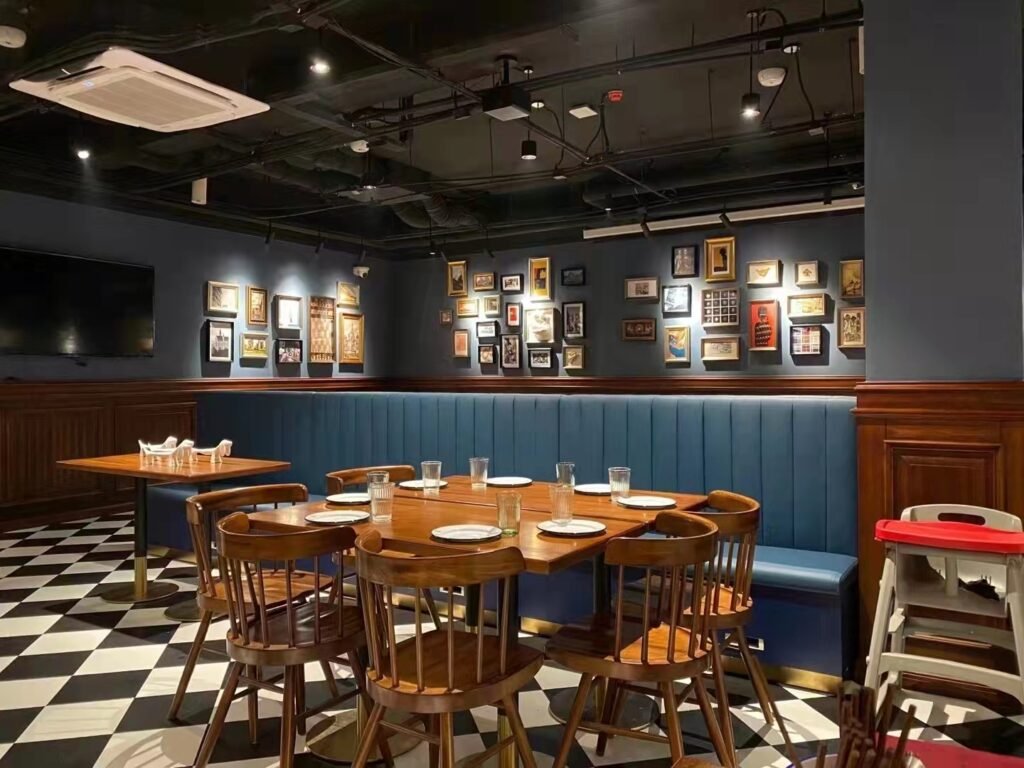
Stability Is More Than a Chair Standing Still
A chair that stands evenly in a showroom may behave differently during everyday restaurant service.
Guests may shift their weight, lean against the backrest or push the chair backward to leave the table.
A stable design must account for the interaction between frame geometry, seat position and normal user movement.
During sample approval, observe how the chair behaves when a person sits down, changes position and stands up under normal conditions.
Avoid treating informal manual checks as a substitute for a recognized structural test. They are useful for spotting obvious concerns, but they do not establish a certified load capacity or long-term durability rating.
Pay Attention to Floor Glides
Floor-contact components are easy to overlook because they are small and inexpensive compared with the rest of the chair.
However, damaged or unsuitable glides can make chairs noisy, affect how smoothly they move and potentially contribute to flooring damage.
The appropriate glide depends on the frame design and floor material.
Restaurants with timber, tile, vinyl or other flooring may have different requirements.
Buyers should confirm that the glides are securely fitted, suitable for the intended floor and reasonably practical to replace.
What Should a Supplier Be Able to Show You?
Claims such as “commercial grade,” “heavy-duty” and “high strength” are common in furniture marketing.
These terms alone do not tell a buyer how the chair was evaluated.
For projects where durability is a major purchasing requirement, ask the supplier for more specific information.
A useful discussion may cover:
- Frame material and construction details
- Main joint and backrest connection methods
- Applicable structural or durability test information
- Seat support and upholstery specifications
- Protective finishes and cleaning recommendations
- Floor glides and replaceable components
- Relevant sample approval procedures
- Any project-specific compliance requirements
In the United States, commercial seating buyers may encounter references to ANSI/BIFMA seating standards. The applicable standard and test requirements depend on the product category and project specification; a supplier should not claim compliance without supporting evidence.
For restaurant projects with particular performance requirements, the buyer and supplier should agree on the relevant testing criteria before production.
Where formal test reports are unavailable, it is better to acknowledge that limitation and establish an appropriate evaluation process than to rely on unverified performance claims.
How to Evaluate a Sample Before Placing a Large Order
Imagine a restaurant group preparing to purchase 200 chairs.
The project team has selected a design that matches the interior, and the supplier has provided a sample.
Instead of approving the chair based on appearance alone, the team should assess how its construction and specifications match the expected use.
A practical review can proceed through a short series of checks.
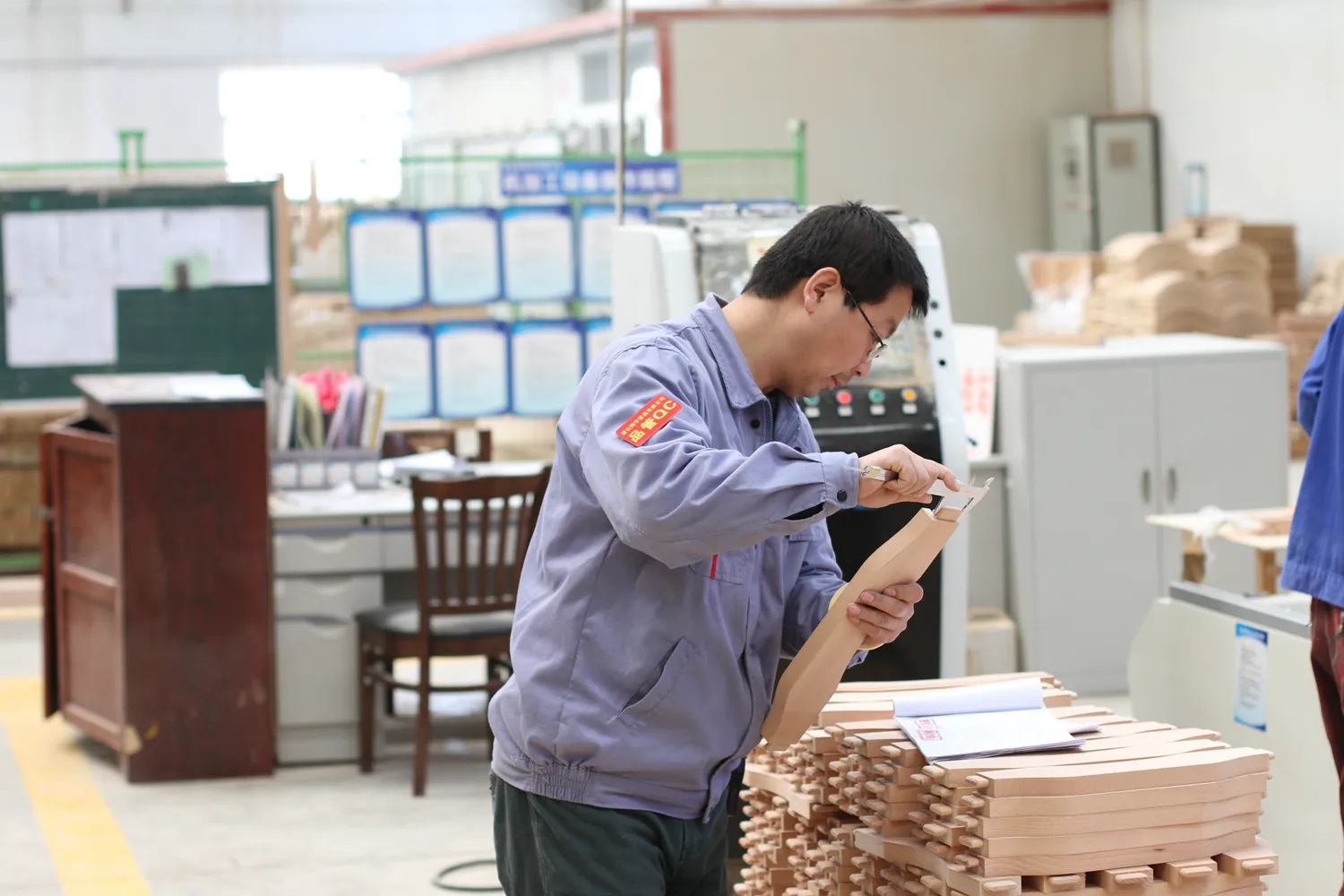
Check the dimensions and construction. Confirm the frame, seat and backrest match the approved drawing. Record the materials and major construction details.
Inspect the connections. Examine visible joints, mounting points and fasteners. Note anything loose, poorly aligned or difficult to access for maintenance.
Review the sitting experience. Test the chair with the intended table and check comfort, posture and ease of movement.
Examine the finishing details. Look for uneven coatings, sharp edges, poor upholstery attachment or exposed components that may become problematic during use.
Confirm maintenance requirements. Ask how the chair should be cleaned and whether glides, upholstery or other selected parts can be replaced.
Finally, record the approved sample specifications so that the bulk order can be compared against them.
For larger projects, sample inspection should be supplemented by appropriate testing or supporting documentation where required.
Heavy-Duty Does Not Mean Every Restaurant Needs the Same Chair
A high-volume cafeteria and a quiet hotel dining room may both need durable seating, but their priorities can differ considerably.
A cafeteria may value practical cleaning, manageable weight and the ability to rearrange chairs quickly.
A full-service restaurant may place greater importance on upholstery comfort and maintaining the appearance of coordinated seating over time.
A café with a compact floor plan may prefer a smaller chair footprint, while a large restaurant may need several different seating types.
| Dining environment | Primary consideration | Useful buying question |
|---|---|---|
| High-turnover restaurant | Repeated movement and cleaning | How are the frame joints and finishes designed for frequent use? |
| Café | Compact dimensions and easy handling | Can staff reposition chairs comfortably? |
| Cafeteria | Maintenance and practical seating arrangements | Are glides and contact surfaces easy to maintain? |
| Full-service restaurant | Comfort combined with durability | Will upholstery and seat support suit longer dining periods? |
| Multi-location restaurant chain | Repeatable specifications | Can the same model, materials and finishes be supplied consistently? |
The right heavy-duty chair is the one whose structure and materials suit its actual use, not necessarily the one with the most substantial appearance.
Bulk Ordering Requires Consistent Specifications
When a restaurant project moves from sample approval to bulk production, another challenge appears: consistency.
If an order contains 150 identical chairs, buyers expect the same dimensions, construction, finish and upholstery throughout the shipment.
Even small variations can affect how furniture looks or performs when installed together.
Before production, ensure that the approved sample is connected to a clear specification.
This should include the model number, drawings, dimensions, main materials, upholstery reference and finish codes where applicable.
For projects involving custom seating, buyers should also clarify how changes will be recorded and approved.
TSXY’s Custom Furniture Solutions can be used to discuss project-specific material choices, finish coordination and custom production requirements.
Keeping those decisions documented makes bulk-order review and future repeat purchasing more manageable.
Choosing a Chair That Makes Sense Beyond Opening Day
Restaurant furniture should be evaluated for the period after installation, not only for the day the restaurant opens.
Heavy-duty performance is not defined by weight alone. It depends on structural design, reliable joints, seat construction, appropriate finishes and suitability for the actual dining environment.
Before ordering, buyers should inspect samples, clarify material specifications and request relevant testing information when the project requires it.
They should also consider how the furniture will be cleaned, maintained and replaced.
For procurement teams comparing commercial restaurant furniture, careful product evaluation helps reduce uncertainty and supports better long-term purchasing decisions.