
Table of contents
- Will the Furniture Hold Up During a Normal Service Day?
- How Much Space Does Each Chair Really Need?
- Are the Chairs Comfortable for the Expected Dining Time?
- What Should Buyers Check on Restaurant Tables?
- Will the Materials Survive Daily Cleaning?
- What Changes When Buying for Multiple Restaurant Locations?
- What Information Should Be Included in a Restaurant Furniture Quotation?
- How Can Buyers Reduce Replacement Problems After Opening?
A restaurant chair may look excellent in a showroom and still become a problem after a few months of daily service. Guests move it repeatedly, staff clean it several times a day, and the legs may take hundreds of small impacts from tables, shoes and cleaning equipment.
The same applies to dining tables. A beautiful tabletop is not much use if the surface stains easily, the edges chip or the base starts to wobble.
When purchasing commercial restaurant furniture, buyers need to look beyond appearance and consider how every piece will perform during actual restaurant operations.
For restaurant owners, purchasing managers and contractors, the following questions help separate furniture that simply looks suitable from furniture that is genuinely practical for commercial use.
Will the Furniture Hold Up During a Normal Service Day?
Think about what happens in a busy restaurant between opening and closing.
Dining chairs are pulled away from tables, pushed back, moved between groups and occasionally dragged across the floor. Tables are wiped repeatedly, exposed to spilled drinks and sometimes moved to accommodate larger parties.
These everyday actions place different demands on furniture than occasional residential use.
For restaurant chairs, buyers should pay attention to frame construction, joint strength, leg stability and the connection between the seat and frame. A strong-looking frame does not automatically mean that every joint is suitable for repeated movement.
Metal chairs may offer practical advantages in high-frequency dining environments, particularly when the frame design and welding are appropriate for the intended use. Wooden chairs can also perform well, but their joinery, reinforcement and finish quality deserve close attention.
For upholstered chairs, the fabric and foam should be considered alongside the frame. A structurally sound chair can still require early replacement if the upholstery wears quickly or the seat loses its shape.
Buyers comparing restaurant dining chairs should therefore evaluate the complete construction rather than judging durability from the frame material alone.
How Much Space Does Each Chair Really Need?
One of the easiest mistakes in restaurant furniture procurement is calculating seating capacity from table dimensions without allowing enough room for the chairs themselves.
A chair needs more than its listed width. Guests need space to sit down, stand up and move away from the table. Staff also need to pass through the dining area while carrying food and drinks.
Two chairs with similar overall dimensions can behave very differently in the same layout. Armrests, curved backs and angled rear legs may increase the space required around a table.
| Dining situation | Furniture consideration | Potential problem |
|---|---|---|
| Compact café | Chair footprint and ease of movement | Oversized chairs reduce usable seating space. |
| Busy casual restaurant | Clearance between tables and circulation routes | Staff and guests may struggle to move comfortably. |
| Family dining | Flexible seating and table arrangements | Fixed layouts make larger groups difficult to accommodate. |
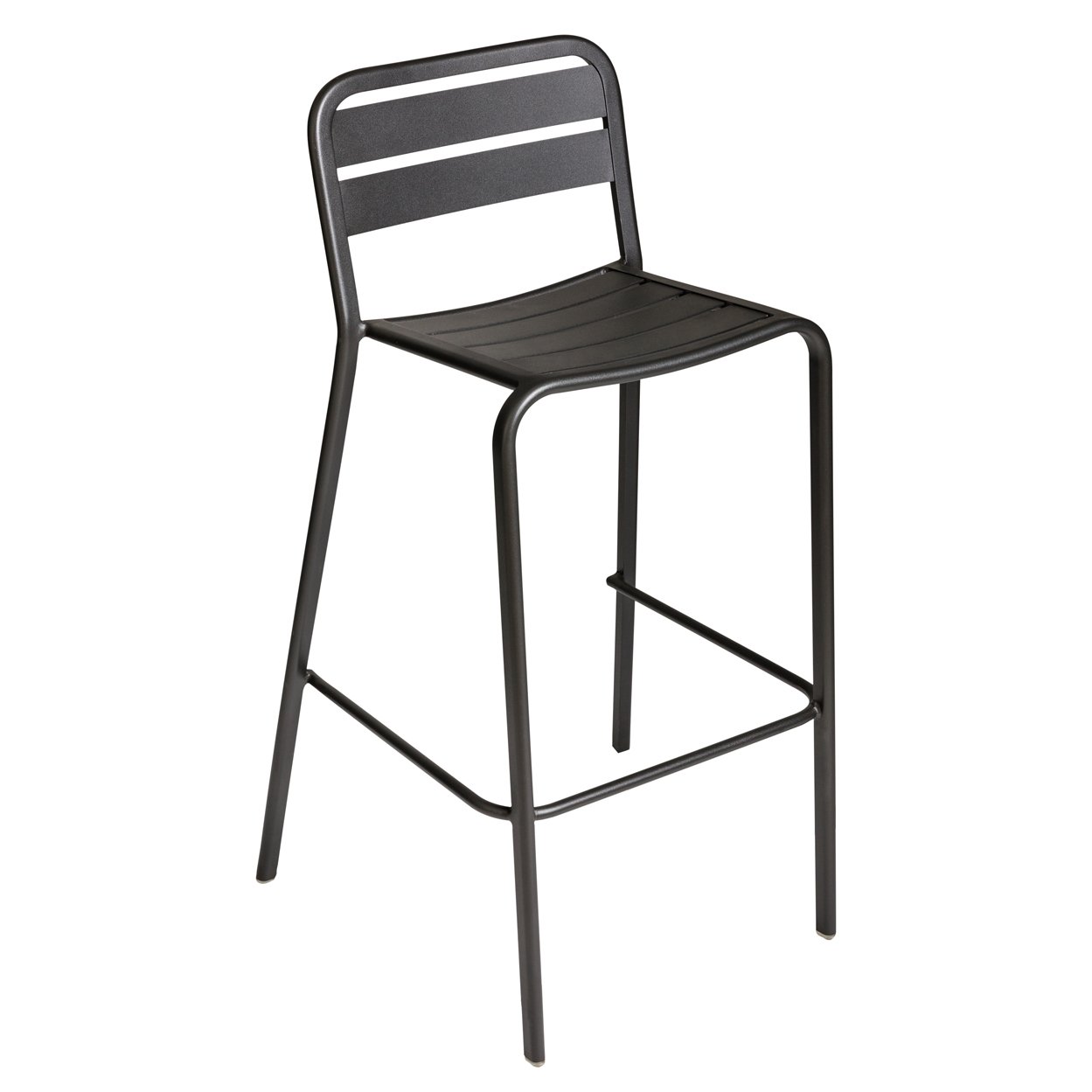
| Bar or counter area | Seat height, footrest position and counter clearance | Incorrect proportions create uncomfortable seating. |
Before ordering, place the proposed chair dimensions into the actual restaurant floor plan. If possible, test a sample chair with the intended table rather than relying only on catalogue measurements.
The goal is not to fit the maximum possible number of seats into the room. It is to achieve a workable balance between seating capacity, guest comfort and daily service efficiency.
Are the Chairs Comfortable for the Expected Dining Time?
Comfort requirements vary between restaurant concepts.
A fast-casual restaurant, where guests typically stay for a shorter period, may prioritize easy movement, compact dimensions and simple cleaning. A full-service restaurant may place greater importance on back support, seat cushioning and longer sitting comfort.
Neither approach is automatically better. The right choice depends on the dining experience the operator wants to provide.
During sample evaluation, check the seat height, seat depth, backrest angle and the way the chair supports different users.
For upholstered seating, buyers should also ask about foam specifications and how the cushion is supported. A thick cushion does not necessarily provide better long-term comfort if its structure and materials are unsuitable.
A practical sample test: Place the chair beside the intended dining table and have several people sit, stand and move it. Check whether the seat feels comfortable, whether the backrest provides useful support and whether the chair can be handled easily during service.
This simple evaluation often reveals issues that are difficult to identify from photographs or technical drawings.
What Should Buyers Check on Restaurant Tables?
Restaurant tables face a different set of challenges from chairs. Their surfaces are exposed to food, moisture, cleaning products, heat and frequent contact with tableware.
For a dining table, the tabletop material, edge construction and base stability should be evaluated together.
High-pressure laminate surfaces can be practical for many commercial dining applications because they offer a range of finishes and can be relatively straightforward to maintain. Wood veneer and solid wood can provide a warmer appearance, but their suitability depends on the protective finish, maintenance expectations and restaurant environment.
Whatever material is selected, buyers should pay particular attention to exposed edges and joints. These areas can be vulnerable to moisture, impacts and repeated cleaning.
Do Not Overlook the Table Base
A stable tabletop requires an appropriate base. Buyers should consider the size and weight of the top, the base footprint, the fixing method and the floor conditions.
A table that feels stable on a perfectly level showroom floor may behave differently on restaurant flooring with slight variations.
Where appropriate, adjustable feet can help reduce wobbling. The base should also leave sufficient legroom and avoid interfering with chair placement.
For larger restaurant projects, test the selected tabletop and base together before approving the complete order.
Will the Materials Survive Daily Cleaning?
Restaurant furniture is cleaned far more frequently than most residential furniture. This makes cleaning compatibility an important purchasing consideration, not simply a maintenance issue after installation.
Different restaurant concepts also create different conditions. A coffee shop may deal with frequent drink spills, while a family restaurant may need to remove food stains and clean upholstered seating regularly.
Buyers should confirm that the proposed materials and finishes are compatible with the cleaning procedures expected at the site.
| Furniture component | What buyers should confirm |
|---|---|
| Tabletop surface | Resistance to common spills, cleaning products and routine abrasion |
| Table edges | Sealing, impact resistance and moisture protection |
| Metal frame | Coating quality, corrosion considerations and ease of cleaning |
| Wooden frame | Protective finish and maintenance requirements |
| Upholstery | Cleaning method, stain performance and replacement options |
| Seat cushion | Foam support and performance under repeated use |
Material claims should be supported by suitable specifications or testing information where required. For projects with specific fire safety, durability or other regulatory requirements, confirm the applicable standards before approving the material.
A material that is easy to clean can reduce daily maintenance work, but it still needs to meet the restaurant’s appearance, comfort and budget requirements.
What Changes When Buying for Multiple Restaurant Locations?
Buying furniture for one restaurant is different from sourcing furniture for a chain.
A single location may focus on the immediate opening schedule and overall appearance. A restaurant group must also consider whether the same furniture can be supplied consistently for future locations.
Imagine that a restaurant brand opens its first location with a particular chair design. Two years later, the company wants the same chair for another location, but the original upholstery is no longer available or the frame dimensions have changed.
Even if the replacement chair looks similar, small differences can make the dining spaces feel inconsistent.
For multi-location projects, buyers should establish clear specifications for:
- Approved chair and table models
- Overall dimensions and seat heights
- Frame materials and construction details
- Upholstery references and finish codes
- Tabletop materials and edge profiles
- Packaging and product identification
- Replacement parts and repeat-order requirements
These specifications help suppliers reproduce the approved furniture more consistently across separate orders.
Where dimensions, materials or finishes need to be adapted for a restaurant brand, a coordinated custom furniture development process can help establish a consistent production reference before bulk ordering.
What Information Should Be Included in a Restaurant Furniture Quotation?
Two suppliers may quote different prices for what appears to be the same chair. However, the price difference may reflect different materials, construction methods, upholstery, packing arrangements or delivery terms.
That makes a price-only comparison unreliable.
For a commercial restaurant furniture project, a useful quotation should identify the product and its major specifications clearly enough for buyers to compare alternatives.
Before accepting a quotation, confirm:
- Product model, drawings or reference images
- Dimensions and approved material specifications
- Frame construction and surface finish
- Upholstery, foam and tabletop details where applicable
- Order quantities and any minimum order requirements
- Sample arrangements and approval requirements
- Packaging method and product labeling
- Production lead time and delivery terms
- Required testing or supporting documents
- Replacement and after-sales arrangements
It is also worth asking which parts of the quotation can change if the project specifications are revised.
For example, changing from a standard upholstery fabric to a project-specific material may affect cost, sample timing and production scheduling. Clarifying this early makes budget control easier.
How Can Buyers Reduce Replacement Problems After Opening?
Restaurant furniture purchasing does not end when the goods arrive.
After opening, individual pieces may be damaged, upholstery may need replacement or additional furniture may be required as the business changes.
This is why buyers should consider future maintenance and replacement before choosing a supplier.
Ask whether replacement chairs, matching finishes, upholstery materials or selected components can be supplied later. For large projects, keeping approved specifications and product references is especially useful.
It is also sensible to check packaging and identification during delivery. Clearly labeled products are easier to distribute across different areas or restaurant locations, particularly when several chair models or finishes are included in the same shipment.
For buyers sourcing restaurant furniture in bulk, the best purchasing decision is rarely based on the lowest initial unit price alone.
Furniture that performs reliably, is easier to maintain and can be reordered consistently may offer better long-term value than a cheaper product that creates frequent replacement problems.
Choosing Furniture for the Way a Restaurant Actually Operates
Good restaurant furniture should support the business rather than create extra work for the staff.
That means chairs should be comfortable and practical to move, tables should remain stable during service, and materials should suit the restaurant’s cleaning and maintenance routine.
For chain restaurants and larger commercial projects, consistent specifications, sample approval and repeat-order planning become just as important as the original design.
Before placing a bulk order, buyers should evaluate how the furniture will perform throughout a normal working day and how easily the same specifications can be maintained in the future.
Explore TSXY’s commercial restaurant furniture range or share your project requirements to discuss suitable materials, seating options and custom production.