
Table of contents
- The Same Outdoor Furniture Does Not Work Everywhere
- Dining Patios Need Stability More Than Deep Comfort
- Pool Areas Need a Different Material Strategy
- Rooftop Furniture Has to Balance Weight and Flexibility
- Outdoor Lounge Areas Can Prioritize Comfort, but Maintenance Still Matters
- Material Choices Should Follow the Location
- Standard Products and Custom Furniture Serve Different Needs
- Choose the Furniture Around the Way the Area Operates
Choosing hotel patio furniture starts with understanding how the outdoor area will actually be used. A breakfast terrace, pool deck, rooftop lounge and casual patio may all need outdoor furniture, but they should not automatically use the same chairs, tables or materials.
The most useful way to plan these spaces is to compare the operating conditions first: how long guests stay, how often furniture is moved, whether food is served, how much direct sun or rain reaches the area, and how quickly staff need to clean and reset it.
Once those differences are clear, it becomes much easier to choose furniture that fits both the hotel design and daily operation.
The Same Outdoor Furniture Does Not Work Everywhere
Hotel outdoor areas often look similar in a furniture catalog, but they serve very different functions.
| Outdoor Area | Main Furniture Need | What Usually Matters Most |
|---|---|---|
| Restaurant Patio | Dining chairs and tables | Stability, cleaning and table turnover |
| Poolside | Loungers, side tables and casual seating | Moisture, UV exposure and fast drying |
| Rooftop Terrace | Lounge seating and flexible tables | Wind exposure, stability and layout |
| Café Terrace | Compact chairs and small tables | Mobility, space efficiency and easy storage |
| Outdoor Lounge | Sofas, lounge chairs and low tables | Comfort, upholstery and long-stay use |
This is why buying one outdoor furniture collection for every exterior space can create problems. The visual style may be consistent, but the functional requirements are not.
Dining Patios Need Stability More Than Deep Comfort
For a hotel restaurant patio, furniture usually needs to support frequent seating changes and regular table service.
Guests may stay for breakfast, lunch or dinner, but the furniture is generally used differently from a pool lounger or rooftop sofa.
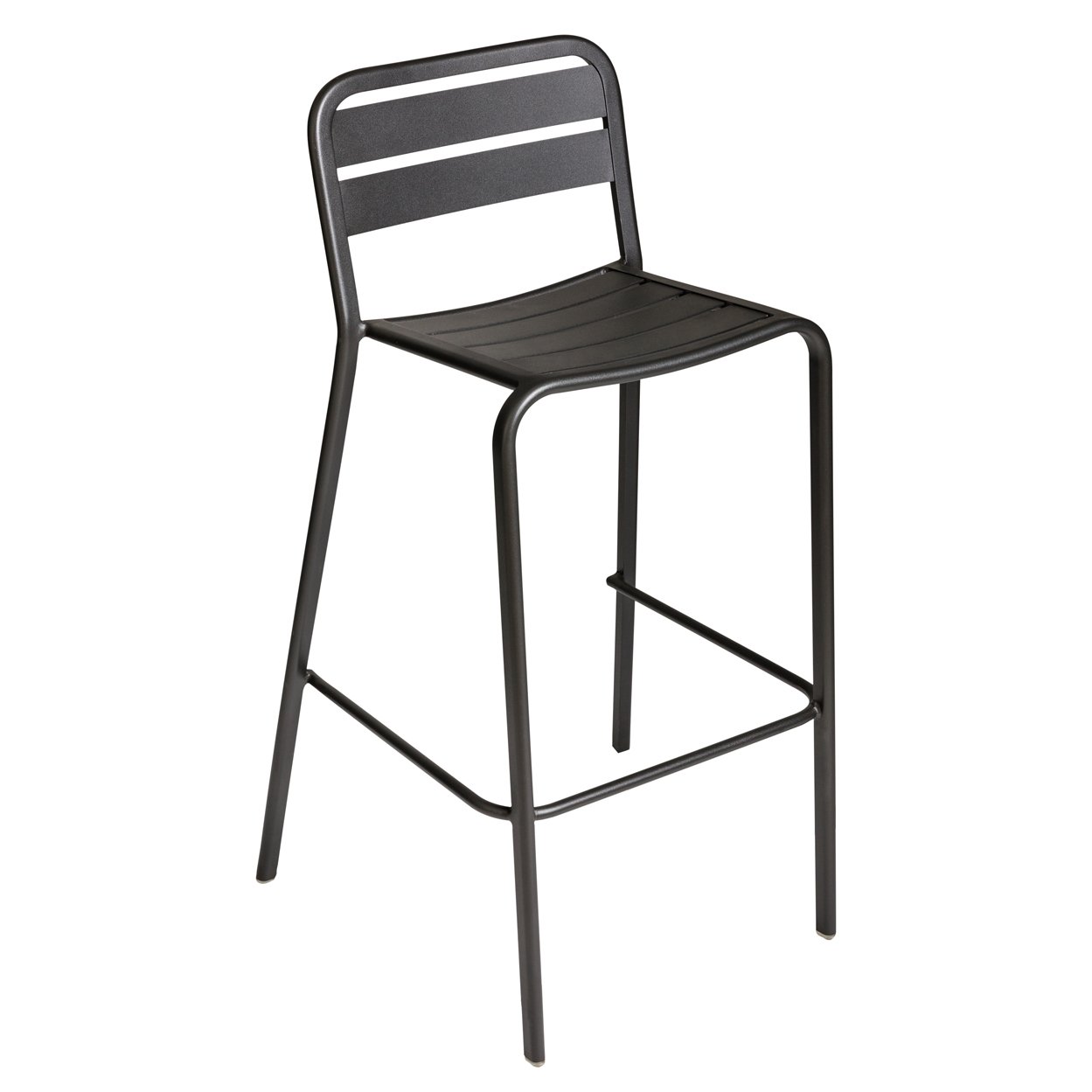
Dining chairs should be comfortable enough for a meal without becoming unnecessarily large. Tables need stable bases, practical heights and surfaces that can be cleaned repeatedly throughout the day.
Chairs need to move easily
Staff often reset tables between guests, so extremely heavy dining chairs can slow down service. At the same time, frames should be stable enough that repeated movement does not loosen joints quickly.
Tables need the right base for the top
A visually light base may look attractive but can become unstable if paired with an oversized tabletop. This is especially important outdoors, where uneven flooring can make small stability problems more noticeable.
Surface selection affects daily cleaning
A highly textured or delicate tabletop may require more maintenance than a hotel restaurant can realistically provide during busy service periods.
For dining areas, operational efficiency often matters more than adding extra upholstery or decorative complexity.
Pool Areas Need a Different Material Strategy
Move the same project from the restaurant patio to the pool deck and the priorities change immediately.
Now the furniture has to deal with wet guests, standing water, sunscreen, direct sunlight and frequent repositioning.
A dining chair that performs perfectly under a covered terrace may not be the right product beside a swimming pool.
Poolside products generally need stronger attention to:
- corrosion resistance
- UV exposure
- drainage
- fast-drying materials
- easy-clean surfaces
- replaceable cushions or covers
This is also why material descriptions such as “outdoor fabric” or “outdoor metal” are too general for a project specification.
The buyer should understand how the complete product is intended to perform in the actual environment.
For a deeper look at these conditions, see our guide on how to choose hotel poolside furniture that can handle daily use.
Rooftop Furniture Has to Balance Weight and Flexibility
Rooftop terraces create another decision that buyers do not face in the same way at ground level.
Hotels often want furniture that can be rearranged for different guest groups, events or service periods. That encourages lightweight furniture.
But exposed rooftop areas may also experience stronger wind conditions.
This creates a direct trade-off:
easy movement versus sufficient stability.
A very light chair may be convenient for staff but unsuitable for an exposed terrace. A heavy base may improve stability but become difficult to move during daily operations.
The final choice therefore depends on whether the terrace is:
- fully exposed
- partially covered
- protected by walls or screens
- used mainly for dining
- used as a flexible lounge or event area
Furniture should be selected around those conditions rather than around appearance alone.
Outdoor Lounge Areas Can Prioritize Comfort, but Maintenance Still Matters
An outdoor lounge is usually designed for longer stays than a restaurant patio.
Guests may sit for drinks, conversation or relaxation, so deeper seating and softer cushions can make sense here.
However, comfort introduces more materials that need maintenance.
A fully upholstered outdoor sofa may provide a premium experience, but the hotel should understand:
- how quickly cushions dry
- whether covers can be removed
- how replacement cushions are ordered
- whether water can escape from the seat construction
- how fabrics respond to sunlight
Hotels with limited staff may prefer simpler outdoor seating systems that require less daily handling.
Higher-service properties may be willing to manage removable cushions or more detailed upholstery in exchange for greater comfort.
Neither option is automatically better. The right choice depends on how the property operates.
Material Choices Should Follow the Location
Different outdoor materials solve different problems, which is why there is rarely one universal “best” material for every hotel patio.
| Material | Main Advantage | What Buyers Should Check |
|---|---|---|
| Aluminum | Lightweight and corrosion resistant | Frame thickness, welding and coating quality |
| Steel | Strong and stable | Corrosion protection and product weight |
| Wood | Warm and natural appearance | Species, finish, maintenance and weather exposure |
| Outdoor Fabric | Comfort and design flexibility | UV resistance, cleaning and moisture performance |
| HPL / Compact Surfaces | Practical for tabletops | Edge quality, substrate and outdoor suitability |
| Woven Materials | Light appearance and ventilation | Frame construction and long-term outdoor durability |
The environment should decide the specification.
A covered café terrace may allow materials that would not be suitable beside a pool or on a fully exposed rooftop.
For U.S. hospitality projects, outdoor layouts should also consider applicable accessibility requirements. The official ADA Standards for Accessible Design provide a useful reference when planning accessible routes and seating areas.
Standard Products and Custom Furniture Serve Different Needs
Not every hotel patio requires custom furniture.
If a standard chair already fits the design, dimensions and performance requirements, there may be little reason to redesign it.
Customization becomes more useful when the project needs:
specific dimensions for a restricted terrace layout.
custom finishes that coordinate with the hotel exterior.
project upholstery that matches the wider hospitality design.
special table sizes for a particular restaurant seating plan.
repeatable furniture for several hotel properties.
For buyers sourcing custom hotel furniture for indoor and outdoor hospitality areas, the goal should be to customize only where it creates a clear functional or visual benefit.
Standardization can reduce development time and cost, while targeted customization helps the furniture fit the actual project.
Choose the Furniture Around the Way the Area Operates
Good hotel patio furniture is not defined by one material, style or product type.
The right specification depends on what happens in the space every day.
A dining terrace needs efficient seating and stable tables. A pool deck needs moisture-resistant products that dry quickly. A rooftop has to balance mobility with stability. An outdoor lounge can prioritize comfort but requires more attention to upholstery and maintenance.
Once buyers separate these areas instead of treating them as one generic “outdoor furniture” category, product decisions become much clearer.
The most practical outdoor furniture package is usually the one that matches the hotel’s design while also reducing unnecessary maintenance, replacement and operational problems after opening.
You May Also Be Interested In
How to Choose Hotel Poolside Furniture That Can Handle Daily Use
What Should Luxury Hotel Furniture Get Right Beyond Appearance?