
Table of contents
- What Does Value Engineering Mean in Hotel Furniture?
- Is Value Engineering the Same as Downgrading the Furniture?
- When Should Value Engineering Start?
- Which Hotel Furniture Items Usually Offer the Most Optimization Potential?
- Can Materials Be Changed Without Changing the Appearance?
- Should Solid Wood Be Replaced Everywhere to Reduce Cost?
- Can Standardizing Finishes Really Save Money?
- What About Furniture Dimensions?
- Can One Chair Frame Be Used in Several Areas?
- Which Details Often Add Cost Without Adding Much Guest Value?
- Where Should Buyers Avoid Value Engineering Too Aggressively?
- How Can Buyers Compare the Original and Value-Engineered Specification?
- Should the Furniture Manufacturer Suggest Value Engineering?
- What Information Helps a Manufacturer Suggest Better Alternatives?
- Does Value Engineering Always Reduce the Unit Price?
- Can Value Engineering Improve Quality?
- How Do You Know Whether a Cost Reduction Has Gone Too Far?
- Should Value-Engineered Changes Be Sampled Again?
- What Is the Best Value Engineering Question to Ask?
A hotel furniture quotation comes in above budget. The easiest response is to ask the supplier for a lower price.
But that does not explain where the cost is coming from — or whether the supplier can reduce it without changing something important.
Good hotel furniture value engineering works differently. It reviews the design, materials, construction, finishes and production method to identify costs that can be removed while protecting the appearance, function and durability the project actually needs.
Value engineering is not “make it cheaper.” It is “find a smarter way to achieve the same project objective.”
What Does Value Engineering Mean in Hotel Furniture?
In a hotel furniture project, value engineering means reviewing a specification and asking whether every material, dimension and construction detail is necessary.
For example, a designer may specify:
- Solid wood in areas that guests never see
- Several nearly identical wood finishes
- Different cabinet sizes for very similar room types
- Complex decorative details on every furniture item
- Special hardware that adds cost but little practical value
None of these choices are automatically wrong. The question is whether they contribute enough value to justify their effect on the project budget.
Is Value Engineering the Same as Downgrading the Furniture?
No.
Downgrading usually means reducing specification without carefully considering the consequences.
Value engineering should be more selective.
A project may reduce cost on a hidden cabinet surface while keeping the visible veneer unchanged. It may standardize chair frames while keeping different fabrics. It may simplify an internal structure while maintaining the same finished appearance.
The objective is to protect the areas that guests see, touch and repeatedly use while reviewing specifications that create cost without equivalent project benefit.
When Should Value Engineering Start?
Earlier is usually better.
The best time is often after the initial design and BOQ are developed but before every furniture detail has been frozen.
At that stage, the project team can still compare alternatives without creating large revision costs.
If value engineering starts only after:
- Shop drawings are approved
- Materials are purchased
- Samples are completed
- Production has started
then even a sensible change may create more cost than it saves.
Which Hotel Furniture Items Usually Offer the Most Optimization Potential?
Products with repeated components or large quantities often provide more opportunities.
For example, a standard guest room may include:
- Bed frame
- Headboard
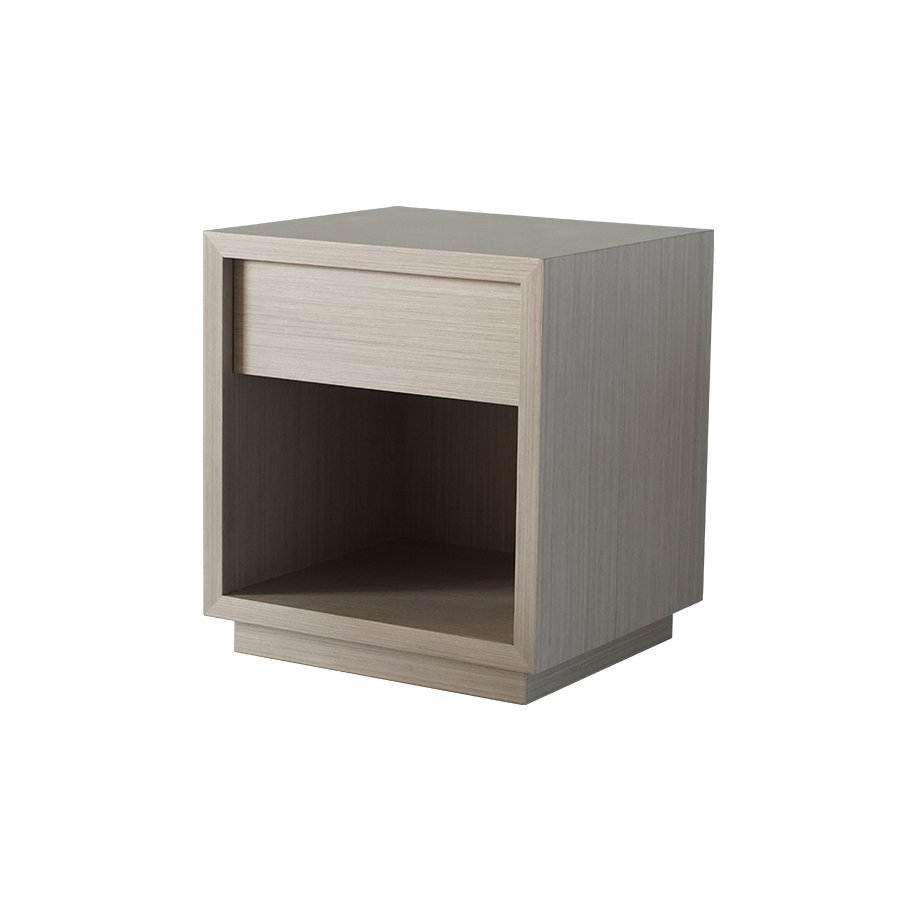
- Two bedside cabinets
- Wardrobe
- Desk
- Desk chair
- Lounge chair
- Luggage bench
If the same room package is repeated across 100 or 200 rooms, even a small design improvement can affect a large number of pieces.
This makes repeated guest-room casegoods, seating and tables particularly important during budget review.
Can Materials Be Changed Without Changing the Appearance?
Sometimes, yes.
One of the most useful value-engineering discussions is separating the visible finish from the underlying construction material.
Consider a wardrobe.
The guest may mainly see:
- Door finish
- External panels
- Handles
- Visible interior areas
The guest does not necessarily see every internal structural component.
This creates an opportunity to review whether premium decorative material is required throughout the entire cabinet or only where it contributes to the design.
The same principle can apply to desks, bedside units and other hotel casegoods.
Should Solid Wood Be Replaced Everywhere to Reduce Cost?
No.
Replacing materials without considering application is exactly what value engineering should avoid.
Solid wood may still make sense for:
- Chair frames
- Table legs
- Shaped components
- Visible decorative elements
- Areas where its structural properties are useful
But large flat furniture surfaces may sometimes be produced more efficiently using appropriate engineered panels with veneer, laminate or another specified finish.
The right decision depends on the furniture type, construction and performance requirement.
Can Standardizing Finishes Really Save Money?
Yes, and the saving is not limited to the finish material itself.
Imagine one hotel room uses:
Finish A on the wardrobe
Finish B on the bedside cabinet
Finish C on the desk
Finish D on the lounge-chair frame
If all four finishes are very similar, the buyer should ask whether the visual difference is important enough to justify separate development.
Every additional finish may require:
- Separate samples
- Separate approval
- Separate material preparation
- Production identification
- Additional QC control
Standardizing several related products around one approved finish can simplify both production and quality control.
What About Furniture Dimensions?
Dimensions are another area where small design decisions can create hidden complexity.
Suppose a hotel has four room types.
The bedside cabinets are specified at:
- 450 mm wide
- 460 mm wide
- 470 mm wide
- 480 mm wide
If those differences are necessary because of real room constraints, they should remain.
But if they exist only because drawings were developed separately, the project may be creating four products where one or two standardized versions could work.
Standardization can reduce:
- Drawing work
- Sample quantity
- Production setup
- Material variation
- Installation confusion
Can One Chair Frame Be Used in Several Areas?
Sometimes.
This can be a particularly effective strategy for seating.
For example, one chair frame may be used with:
- Different fabrics
- Different wood finishes
- Different piping details
- Minor upholstery changes
The hotel can still create visual variation while reducing the number of completely different structures that need to be developed and produced.
However, dining chairs, desk chairs and lounge chairs have different ergonomic requirements, so frame standardization should never be forced where the function is different.
Which Details Often Add Cost Without Adding Much Guest Value?
This depends on the project, but buyers can review items such as:
- Decorative details on hidden surfaces
- Multiple nearly identical finishes
- Unnecessarily complicated edge profiles
- Low-volume custom hardware
- Excessive variation between room types
- Complex stitching used on every upholstered item
- Premium materials in areas with little visual or functional importance
The key phrase is “without adding much guest value.”
A decorative detail that defines the interior concept should not automatically be removed simply because it costs more.
Where Should Buyers Avoid Value Engineering Too Aggressively?
Some specifications directly influence durability or daily hotel operation.
These deserve much more caution.
Chair frames and joints
Reducing structural strength may create wobbling or early failure.
Frequently used hardware
Wardrobe hinges and drawer runners may operate thousands of times during the furniture’s service life.
Seat foam
Guests experience seating comfort immediately.
High-contact surfaces
Desks, tabletops and luggage areas receive repeated wear.
Export packaging
Saving on packing has little value if furniture arrives damaged.
Important visible finishes
Finish inconsistency can become obvious when furniture is repeated across many rooms.
How Can Buyers Compare the Original and Value-Engineered Specification?
A useful review should show exactly what is changing.
| Original Specification | Value Engineering Option | Protected Requirement |
|---|---|---|
| Four similar wood finishes | Use one or two approved finishes | Overall room design |
| Different cabinet size for every room | Standardize where room dimensions allow | Fit and storage function |
| Premium finish on hidden interior surfaces | Use appropriate practical interior finish | Visible exterior appearance |
| Several similar chair structures | Use common frame where function allows | Comfort and visual identity |
| Complex decorative stitching | Simplify selected low-visibility details | Overall upholstery quality |
This makes value engineering easier to discuss because the buyer can see both the saving opportunity and what must remain unchanged.
Should the Furniture Manufacturer Suggest Value Engineering?
A capable manufacturer should be able to identify production-related opportunities, but the manufacturer should not make major substitutions without approval.
The supplier may know that:
- A different construction method is easier to reproduce
- A finish creates unnecessary production complexity
- A dimension makes packaging inefficient
- A specified material has a practical alternative
- Several products could use the same component
Those suggestions can be valuable because the factory sees the design from a manufacturing perspective.
However, the final decision should remain controlled through drawings, samples and written specifications.
What Information Helps a Manufacturer Suggest Better Alternatives?
If the supplier receives only a photo and asks, “How cheap can you make this?”, the value-engineering discussion will be limited.
It is more useful to provide:
- BOQ
- Furniture drawings
- Room types
- Quantities
- Material requirements
- Finish references
- Target project positioning
- Important specifications that cannot change
- Areas where alternatives are acceptable
This tells the manufacturer where flexibility exists.
Does Value Engineering Always Reduce the Unit Price?
Not necessarily.
Some changes may have little effect on one individual product but create savings across the whole project.
For example, standardizing one wood finish may reduce:
- Sample development
- Material variation
- Production changeovers
- QC complexity
- Risk of incorrect installation
The value may therefore appear in project efficiency and risk reduction rather than only in one line of the quotation.
Can Value Engineering Improve Quality?
Yes.
Simplifying an unnecessarily complicated product can sometimes make production more consistent.
A design with fewer unnecessary components, fewer finish variations and clearer repeated construction may be easier to manufacture accurately across a large quantity.
That can improve:
- Dimensional consistency
- Finish consistency
- Assembly
- Inspection
- Replacement-part management
So value engineering should not always be viewed as a compromise. In some cases it produces a more practical commercial product.
How Do You Know Whether a Cost Reduction Has Gone Too Far?
Ask what has changed in the final product.
If the proposal reduces cost but creates:
- Lower structural stability
- Poorer seating comfort
- More visible finish variation
- Shorter hardware life
- More difficult maintenance
- Higher shipping-damage risk
then the saving may simply move the cost to a later stage of the project.
The best value-engineered option should still make sense after the hotel opens.
Should Value-Engineered Changes Be Sampled Again?
It depends on the importance of the change.
A minor hidden construction adjustment may only require updated drawings.
A change involving:
- Seat dimensions
- Foam
- Visible materials
- Major construction
- Wood finish
- Metal finish
may justify another physical review before mass production.
The project team should make sure that the final approved sample reflects the value-engineered specification rather than the original version.
What Is the Best Value Engineering Question to Ask?
Instead of asking:
“How can we make this furniture cheaper?”
ask:
“Which parts of this specification are costing us money without improving the function, appearance or durability we actually need?”
That question leads to a much more useful discussion between the buyer, designer and manufacturer.
Value Engineering Should Protect the Hotel, Not Only the Budget
The goal of hotel furniture value engineering is not to remove quality until the quotation reaches a target number.
It is to understand which specifications create real value and which create unnecessary complexity.
The strongest approach usually protects:
- Guest-visible finishes
- Structural performance
- Comfort
- High-use hardware
- Important dimensions
- Production consistency
while reviewing materials, hidden details, finish variations and product standardization for possible optimization.
Done early enough, value engineering can help a hotel project control cost without turning furniture quality into the next problem that needs to be solved.
Need to Review a Hotel Furniture Specification?
TSXY supports customized hospitality furniture projects from drawings and BOQ review through material selection, sample development and bulk production. Project buyers can also discuss alternative materials, construction and finish options during product development.
Explore Custom Furniture Solutions | View Hotel Furniture