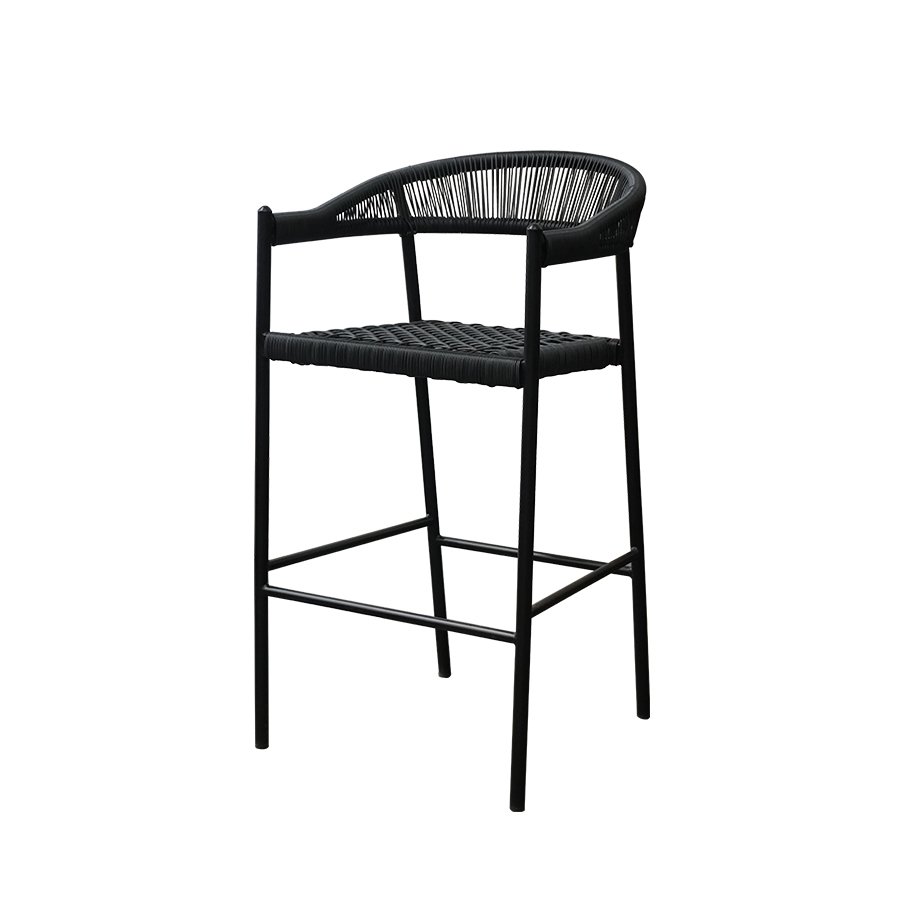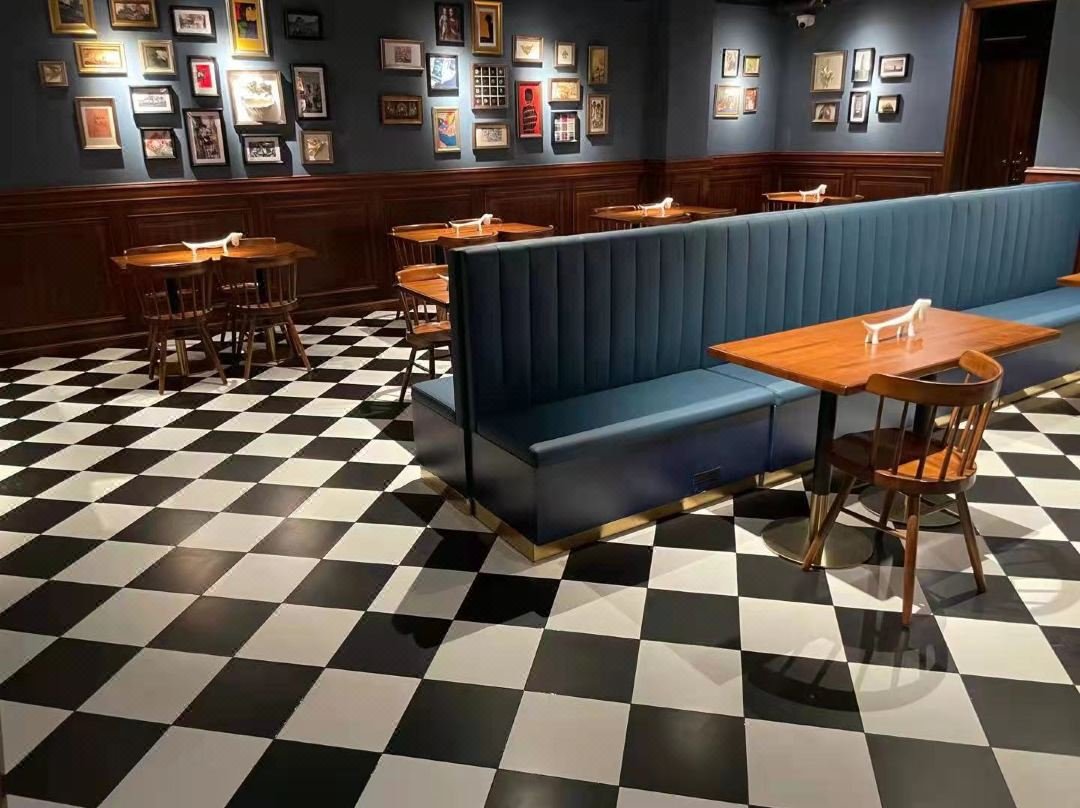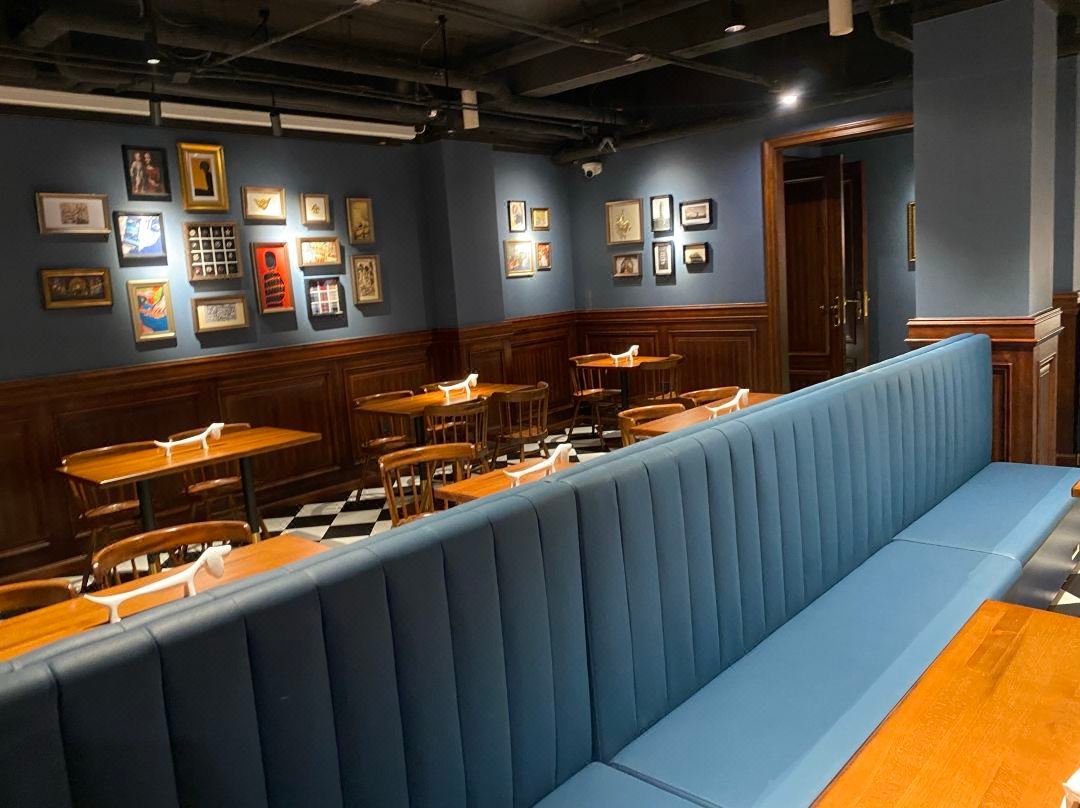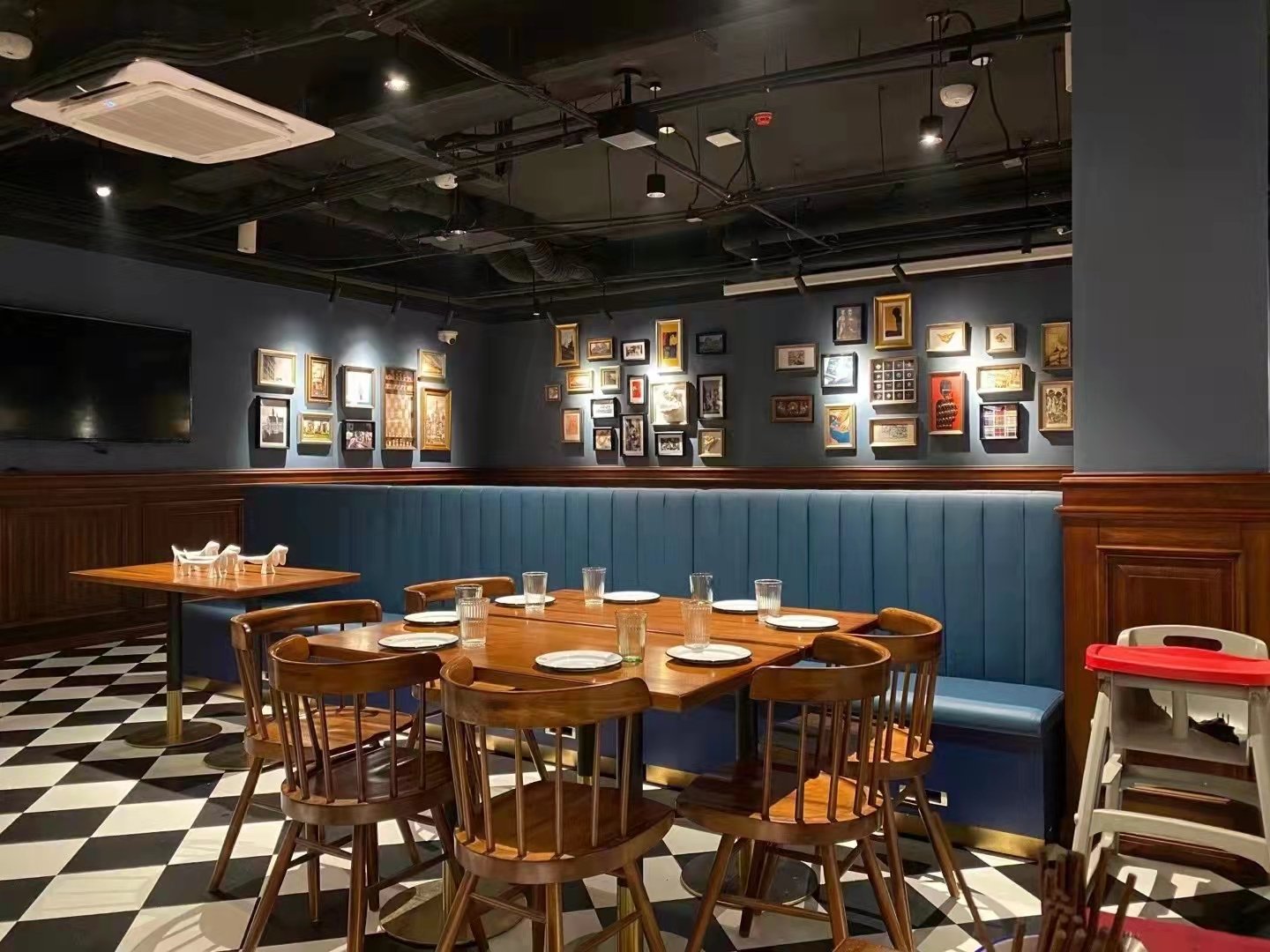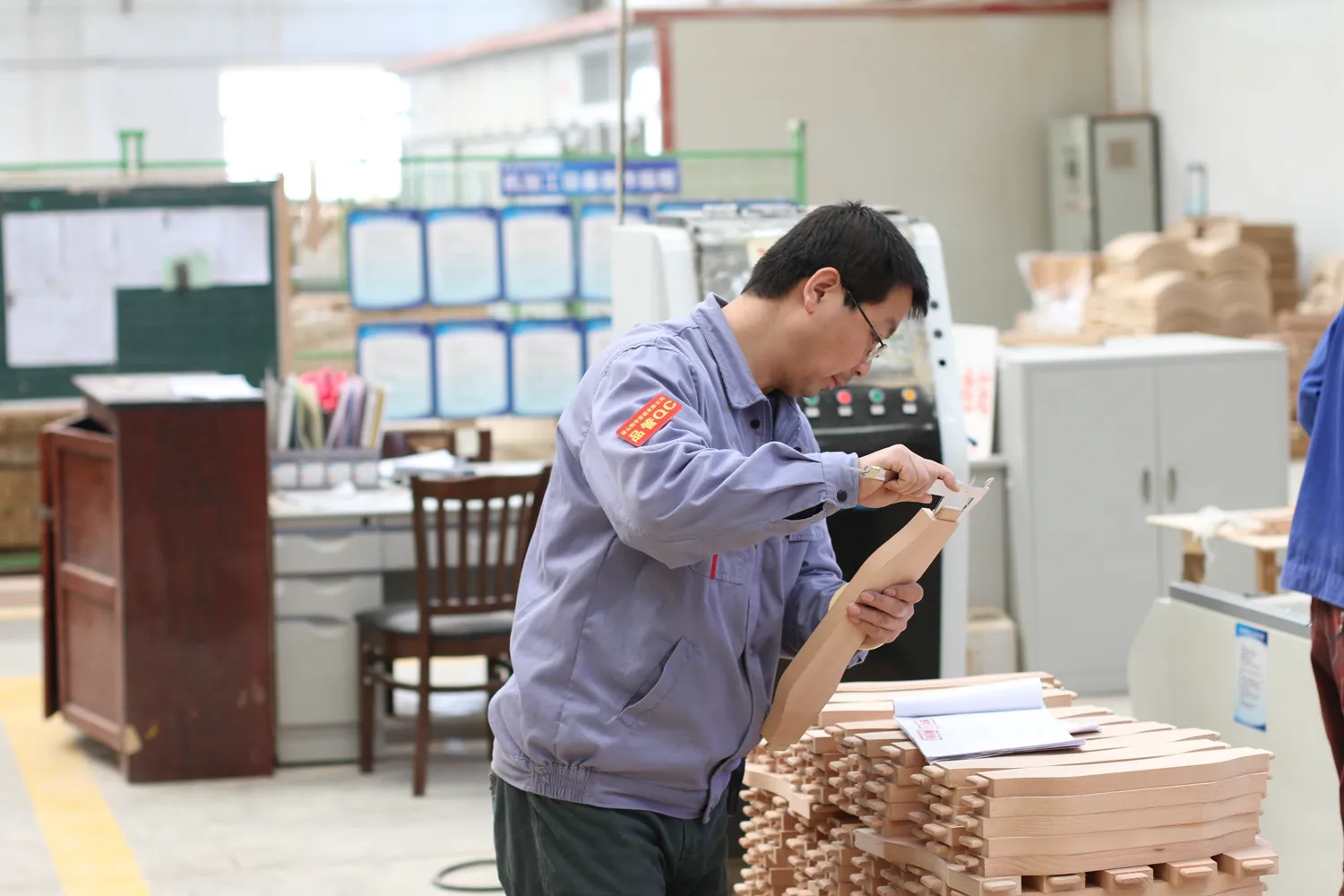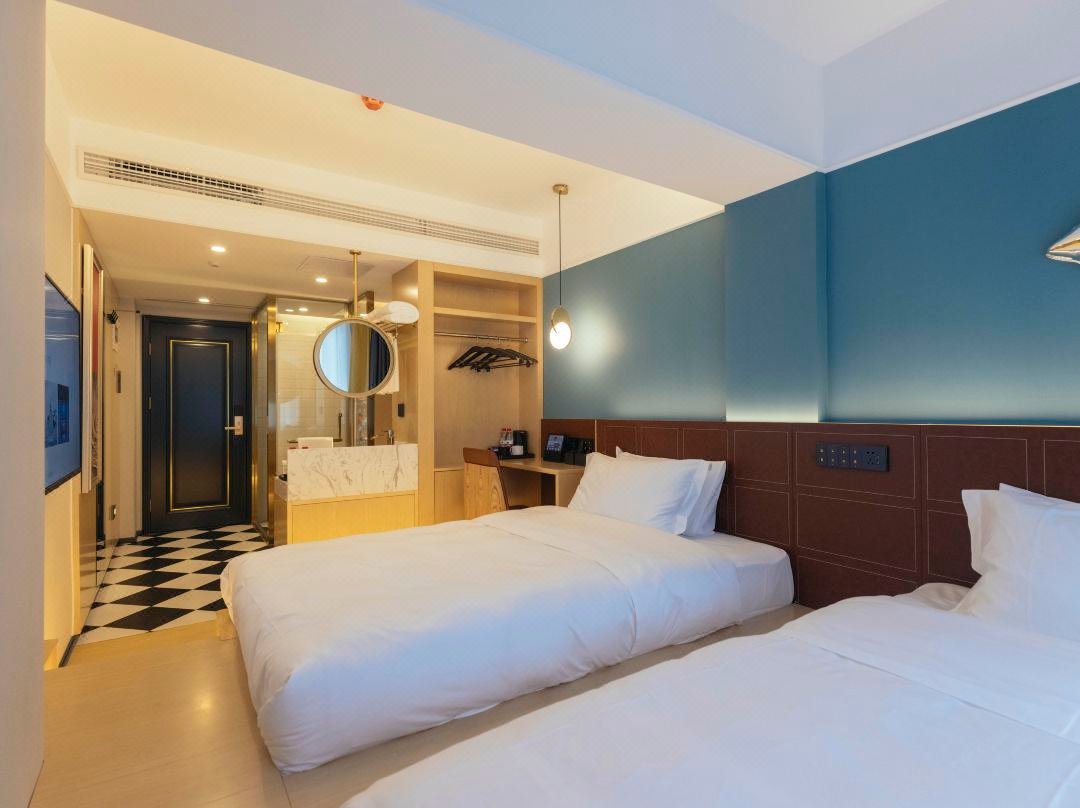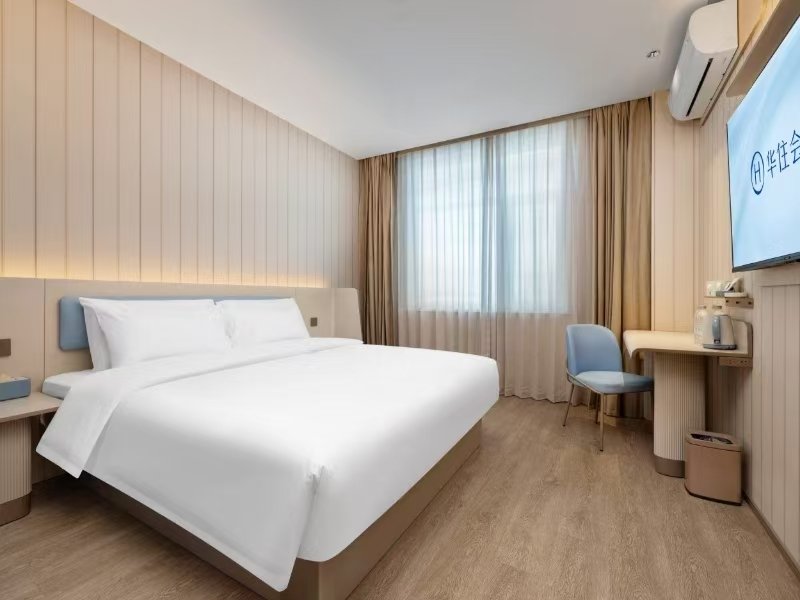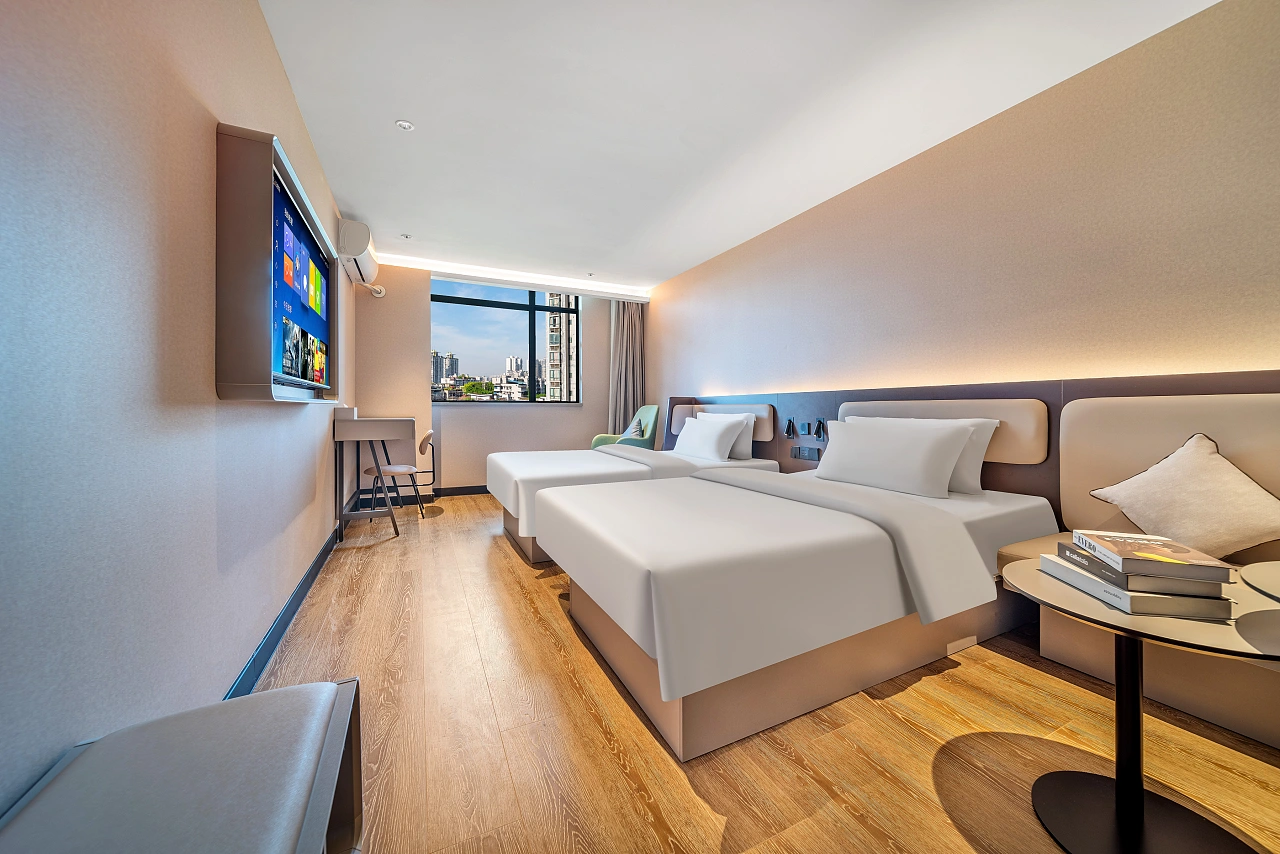

A finished sample can look good in a meeting room and still create problems during mass production.
The purpose of a hotel furniture sample is not simply to show what the product may look like. For a project buyer, it should become the physical reference that connects the drawing, materials, finishes, construction details and final bulk-production standard.
If important details remain unclear when the sample is approved, those same uncertainties can be repeated across dozens or hundreds of furniture pieces.
Sample approval should answer one question: “If mass production follows this product exactly, are we ready to accept the complete order?”
A Good-Looking Sample Is Not Automatically an Approved Sample
Imagine a hotel lounge chair arrives for review.
The fabric color looks correct. The overall shape matches the rendering. Everyone likes the appearance, so the project team says, “Approved.”
But nobody records that:
- The seat needs to be 20 mm higher
- The foam should be slightly firmer
- The metal finish is still temporary
- The production fabric has not arrived yet
- The back stitching needs one more revision
At this point, the sample may be visually acceptable, but it is not yet a reliable production standard.
This is where many hotel furniture sample approval problems begin.
First Decide What the Sample Is Actually Approving
Not every sample serves the same purpose.
A project may use several types of approval references during development.
| Sample Type | Main Purpose | What It May Not Confirm |
|---|---|---|
| Material Sample | Wood tone, metal finish, fabric, leather or tabletop surface | Furniture dimensions or construction |
| Prototype | Overall dimensions, structure and design development | Final production material or finish |
| Pre-Production Sample | Final furniture standard before mass production | Nothing important should remain undefined |
| Mock-Up Room Furniture | Furniture fit, room layout and coordination with the interior | Bulk-production consistency |
Before giving approval, buyers should know exactly which stage the sample represents.
Approval Problem #1: The Dimensions Look Right Until the Furniture Enters the Room
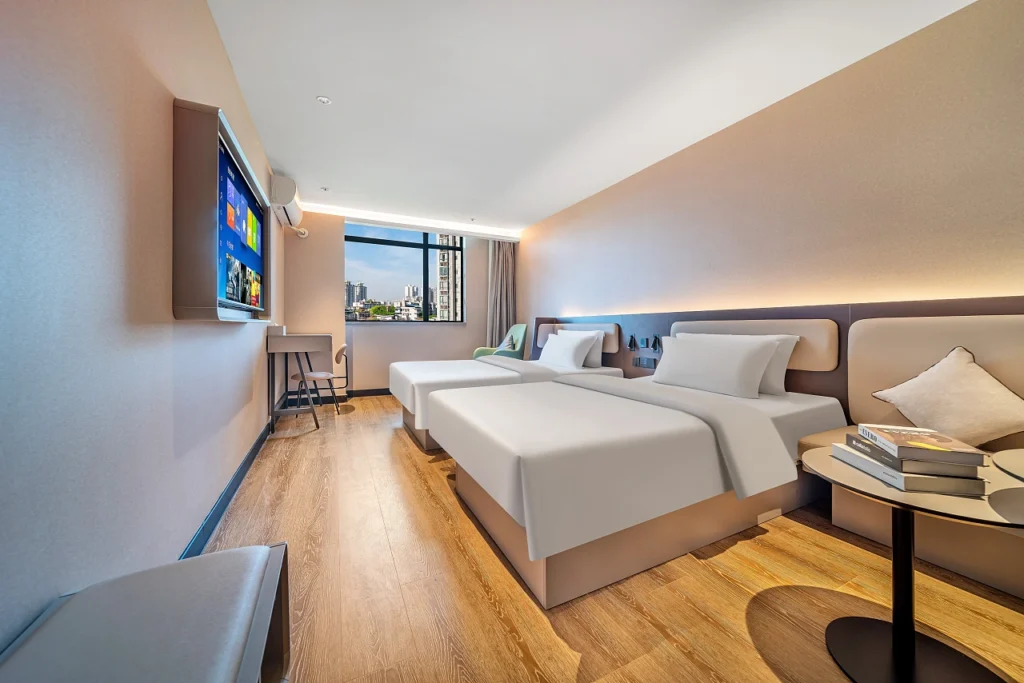
Furniture dimensions should never be reviewed only against the shop drawing.
The sample needs to work inside the actual room layout.
Check Relationships Between Products
A bedside cabinet may have the correct width but still interfere with the bed or power outlet. A lounge chair may be comfortable but occupy too much circulation space. A wardrobe may fit the wall but not have enough clearance for its doors.
During sample review, check:
- Overall width, depth and height
- Seat height and table height relationship
- Wardrobe and drawer opening clearance
- Bedside cabinet position
- Desk and chair clearance
- Walkway space
- Access through doors, corridors and elevators
A dimensional problem discovered in one sample is inexpensive compared with the same problem repeated across 100 guest rooms.
Approval Problem #2: The Material Name Is Correct but the Actual Material Is Not Final
A specification may say “oak veneer,” “black metal,” or “beige fabric,” but those descriptions are still too broad for bulk-production approval.
The buyer should know whether the material on the sample is the actual production material.
For example:
- Is the veneer species final?
- Is the wood stain the final approved tone?
- Is the metal coating or plating the production finish?
- Is the fabric the actual production fabric?
- Is the tabletop the final material and thickness?
- Is the hardware the production specification?
This is especially important because material substitutions made during sample development can easily be forgotten later.
Our Hotel Furniture Materials Guide explains how different materials and finishes affect commercial hotel furniture applications.
Approval Problem #3: Color Is Approved Without Controlling the Finish
Color approval should not rely only on a photo sent through email or WhatsApp.
Two wood samples can be described as the same brown while differing in:
- Undertone
- Grain appearance
- Gloss level
- Texture
- Stain depth
The same issue applies to metal finishes and upholstery.
Keep a Physical Reference Where Possible
For important visible finishes, an approved physical sample gives production and QC teams something concrete to compare against.
This becomes increasingly important when several furniture types need to share the same wood or metal finish.
A finish should not be approved only because it looks correct once. It should also be possible to reproduce it consistently.
Approval Problem #4: The Chair Looks Good but Nobody Tests the Comfort
Upholstered hotel furniture needs physical evaluation.
A drawing can describe seat depth. A specification can describe foam density. Neither can completely communicate how the finished chair feels.
For lounge chairs, dining chairs, sofas and benches, sample review should include real use.
Sit Down and Stay There
Do not evaluate a chair with a three-second sit.
Check:
- Seat height
- Seat depth
- Back angle
- Foam firmness
- Arm height
- Seat width
- Ease of getting in and out
For guest-room seating, comfort should also be balanced against the available room footprint.
Approval Problem #5: Moving Parts Are Reviewed Only Visually
A wardrobe door, drawer runner or hinge cannot be approved from appearance alone.
Open and close every moving part.
Check whether:
- Doors remain aligned
- Drawers operate smoothly
- Handles feel secure
- Hardware makes excessive noise
- Moving components touch surrounding furniture
- Doors stay open or closed as intended
If a mechanism already requires adjustment during sample review, that issue deserves attention before mass production.
Approval Problem #6: Construction Details Are Hidden by the Finished Surface
Once upholstery, panels and finishes are complete, some structural details become difficult to inspect.
For complex or high-use furniture, buyers may need to understand how the product is actually built.
Depending on the item, this can include:
- Chair frame construction
- Wood joints
- Metal welds
- Seat support structure
- Cabinet connections
- Hardware fixing
- Bed-frame assembly method
This does not mean every buyer needs to disassemble every sample. It means critical construction requirements should be defined before they disappear behind the finished product.
The Sample Review Should Produce a Revision List
After inspecting the sample, avoid relying on a conversation such as:
“Make the chair a little higher, change the brown slightly and improve the stitching.”
That sounds clear during the meeting but becomes difficult to control later.
A better revision record would look like:
| Item | Current Sample | Required Revision |
|---|---|---|
| Seat Height | 430 mm | Increase to 450 mm |
| Wood Finish | Sample A | Change to approved Finish B |
| Fabric | Temporary fabric | Use approved production fabric |
| Back Stitching | Single seam | Follow revised drawing Rev.03 |
| Foam | Current sample | Increase seat firmness |
Specific comments are much easier to transfer into drawings, specifications and production instructions.
Do Not Approve the Sample and Drawing Separately
One of the most dangerous situations is when the physical sample reflects one revision while the production drawing reflects another.
Before mass production, check that:
- The drawing matches the approved dimensions
- The specification lists the approved materials
- The finish reference is clearly identified
- Sample revisions have been incorporated
- Product codes match the BOQ
The approved sample, drawing and specification should tell the same story.
What If the Sample Is Approved With Comments?
This happens frequently.
A buyer may approve the overall structure but request several small changes before production.
In that situation, the phrase “approved with comments” needs supporting documentation.
Ask:
- Which parts are fully approved?
- Which parts must change?
- Does the buyer need to see another physical sample?
- Can the change be confirmed through a drawing or material sample?
- Who gives the final release for mass production?
The answer will depend on the importance of the revision.
Changing a hidden screw position and changing an entire chair’s seat geometry should not be treated as the same level of revision.
Some Products Deserve More Sample Attention Than Others
Sampling every furniture item at full scale may not always be practical or necessary.
Buyers can prioritize products based on risk.
Higher-Priority Sample Items
- Highly customized lounge chairs
- Sofas
- Complex wardrobes
- Upholstered bed frames or headboards
- Furniture with unusual dimensions
- Products using important custom finishes
- Items repeated in large quantities
Lower-Risk Items
Simple products using previously approved construction and finishes may sometimes be controlled through drawings, material samples or production references instead of a completely new prototype.
The right sampling strategy depends on project complexity and quantity.
A Sample Can Also Reveal Whether the Manufacturer Is Ready for the Project
Sample development tests more than the furniture.
It also shows how the supplier handles:
- Drawings
- Technical questions
- Material sourcing
- Finish matching
- Revision comments
- Communication
- Problem solving
If important changes are repeatedly forgotten during sample development, the buyer should ask how those same revisions will be controlled during bulk production.
For a wider supplier evaluation framework, see: How to Choose a Hotel Furniture Manufacturer for Your Project .
When Is a Hotel Furniture Sample Really Ready for Approval?
A strong final approval normally means the main questions have already been closed.
Before releasing bulk production, confirm:
- Dimensions are final
- Construction is approved
- Materials are production materials
- Wood and metal finishes are final
- Fabric or leather is approved
- Foam and seating comfort are acceptable
- Hardware is final
- Drawings include all revisions
- Packaging requirements are understood
- The sample can be used as a QC reference
If several of these items are still open, the project may still be in sample development rather than true production approval.
The Real Test Comes After the Sample Is Approved
A perfect sample is useful only if mass production continues to follow it.
Once production begins, QC should compare completed furniture against the approved:
- Dimensions
- Materials
- Finish samples
- Physical product reference
- Latest drawing
- Revision record
The key question changes from:
“Is this a good chair?”
to:
“Does this chair match the approved chair?”
That difference is essential when the same product is repeated throughout a hotel.
A Good Sample Reduces Questions During Mass Production
The best hotel furniture sample is not necessarily the most elaborate prototype.
It is the sample that removes uncertainty.
By the time bulk production starts, the manufacturer should understand exactly what needs to be reproduced, while the buyer should understand exactly what standard will be used for inspection.
That is what turns sample development from a presentation stage into a real quality-control tool.
Developing Custom Furniture for a Hotel Project?
TSXY supports hotel furniture development from BOQ, room layouts and furniture drawings through material confirmation, prototype development, sample revisions and bulk production.
Explore Custom Furniture Solutions | View Hotel Furniture